
Can I File a Lawsuit After a Semi-Truck Accident—and Who Is Responsible?
After a truck crash, you deserve to understand what happened to you so you can rebuild your life. However, pinpointing precisely who is to blame for the wreck so you can hold them accountable can be tough. Truck crashes with passenger vehicles are notoriously complex, and understanding who is at fault is no easy feat.
Why are these accidents and the process of understanding who to blame so complicated? Keep reading to learn more.
Liability 101: Trucking Companies, Drivers, and Other Parties
To be “liable” means to be legally responsible for something that happened. When we discuss liability in an 18-wheeler crash, we are focusing on holding the people, companies, or parties who committed a negligent action accountable for their mistakes.
The foundation of any personal injury claim is establishing that a party had a duty of care, breached that duty, and that breach directly caused the victim’s injuries. In the complex world of commercial vehicle accidents, identifying all breaches of duty is a critical first step.
To correctly determine who is liable for your injuries, you need to develop a complete picture of the crash events and all contributing factors.
Due to the size and weight of large commercial vehicles, many factors can contribute to a crash, and it is common to find multiple parties responsible. The sheer number of regulations governing the trucking industry—known as the Federal Motor Carrier Safety Regulations (FMCSRs)—means there are many distinct duties that can be violated.
A Katy, TX truck crash attorney can begin by thoroughly investigating the situation to establish the chain of events and any regulatory violations. This investigation centers on several key areas of potential failure, including driver conduct and company oversight.
Driver Negligence and Carrier Accountability
The most immediate focus is often on the semi-truck driver. Determining responsibility requires looking into whether the driver was driving responsibly or if their actions constituted a breach of duty. This includes evaluating if they were operating the vehicle while drowsy, driving while distracted, or were otherwise not paying attention to the road or conditions. The investigation also reviews the driver’s complete record, including any prior instances of dangerous behavior.
Equally important is the accountability of the trucking company, or the motor carrier. These companies have extensive responsibilities, ranging from maintenance to personnel management. The investigation must uncover if:
- The company was pushing the driver to work more than is healthy and safe, potentially violating federal hours-of-service rules.
- The truck’s electronic records—such as data from the Electronic Logging Device (ELD) and the truck’s “black box” (Event Data Recorder)—show any evidence of misconduct, such as speeding or hard-braking events.
- The company upheld every necessary maintenance protocol correctly (for example, verifying brake and tire condition).
It is common for multiple issues to cause a crash involving a commercial vehicle. For example, a trucking company may pressure its drivers to drive farther and rest less, resulting in the driver making costly mistakes behind the wheel to meet unreasonable quotas. That same company may also ignore essential parts that need to be maintained, creating a systemic failure that directly leads to the accident.
Expanding the Circle of Responsibility
In addition to the trucking company and its driver, other parties may also bear full or partial liability for the crash. Assigning responsibility to these third parties requires demonstrating how their specific failure contributed to the accident.
Maintenance and Repair Facilities: The company that performs maintenance or repairs on the truck can be liable if it incorrectly services the vehicle. If a mechanic improperly adjusted the brakes or failed to identify a known mechanical defect during a routine inspection, and that failure led to the crash, the repair facility could be held accountable.
Parts Manufacturers: A manufacturer of the truck, its components, or its tires can be held liable if the crash was caused by a mechanical or parts failure due to a defect in design or manufacturing. If the truck’s tires had a structural flaw or the brake system was inherently prone to failure, the company that made those components could be a party in the claim.
Cargo Loaders: The person or company responsible for loading the large truck’s cargo is also frequently investigated. If the cargo was improperly secured, was overloaded beyond legal limits, or was distributed unevenly, it could shift during transit. A shifting load changes the truck’s center of gravity, making it unstable and difficult for the driver to control, often leading to a catastrophic jackknife or rollover accident.
Other Parties: This list can also include another driver on the road at the time of the crash, or the truck driver’s spotter or co-driver if they failed to perform their duties adequately.
The Legal Process and Multiple Claims
When there is more than one person or company responsible for a crash, it means there will be multiple insurance carriers and legal defense teams involved in the resulting claim or lawsuit. Multi-party litigation dramatically increases the complexity of the case, as each liable party and their insurer will attempt to shift the blame to others.
A lawyer who focuses on these types of cases is an invaluable resource for injured people. A legal practice familiar with commercial vehicle law can conduct a prompt, thorough investigation to secure crucial evidence before it is lost or destroyed. This includes issuing legal demands to the trucking company to preserve the vehicle, the electronic data, and the driver’s records. Handling the case against multiple opposing firms and their insurance companies requires clear, tenacious advocacy to ensure that every liable party contributes fairly to the victim’s compensation.
Your Truck Accident Case Gets More Complicated if the Driver Is an Independent Contractor
Hiring a driver as an independent contractor is common among trucking companies because if the contracted driver causes a crash, the company won’t be held accountable for its mistakes behind the wheel. However, how these laws affect your case depends on your unique situation, including factors like if the driver had their own truck and insurance, how much the trucking company was able to influence the driver’s actions, and more.
If the driver of the truck who hurt you was a contractor, or if you don’t know if they were an employee or not, don’t wait to contact an attorney.
Filing a Commercial Truck Accident Claim or Truck Accident Lawsuit
 After a trucking accident, most people start their journey to recovery by filing an insurance claim with the insurance company. You’ll deal with an insurance adjuster while you navigate this process. This person is an insurance company employee, and their job is to settle your claim as quickly as possible. However, the adjuster isn’t allowed or qualified to give legal advice that would help you make a good decision, so if you don’t have a clear understanding of the value of your truck accident injuries and who should be responsible for the wrongdoing, it can be all too easy to get taken advantage of.
At this point in the process, many injured people choose to hire a truck accident lawyer. An attorney can handle negotiations and communications with the insurance company and demand fair compensation. If the company refuses to offer a fair settlement offer amount, an attorney can help you initiate a lawsuit against the liable parties, whether that’s the trucking company, the trucker, or someone else.
Without Action, Evidence Might Disappear After a Trucking Accident
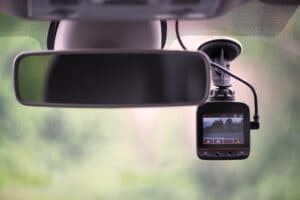
 To understand the full scope of the vehicle accident (and to uncover any corporate wrongdoing) you must act quickly. Trucking companies can legally erase the data from dashcams and electronic logs within a certain time frame. However, filing an insurance claim or lawsuit prevents them from doing so without risking getting in a lot of legal trouble. Even surveillance footage from nearby gas stations or other public cameras captured the event could be erased within a few days unless you act fast to protect it.
An experienced attorney will be an incredible resource to you and your family if you need to understand what happened and preserve the evidence that proves it. Not only do we understand the complex process and how to navigate the legal system, we also know how to protect and support our clients as they begin to recover and heal. Your recovery shouldn’t be a fight. You deserve to heal in peace.
When you come to us right away after a crash, we’ll get to work doing what we do best: holding wrongdoers accountable.
To Understand What Happened and What to Do Next, You Need to Talk to a Personal Injury Lawyer
When it comes to determining liability in your truck crash claim, there is no better resource than speaking with a truck accident attorney. Our team knows the Greater Katy area and Texas, because this is our home. We’ve fought and won for countless people that we call neighbors and friends, and it’s our honor to be part of your recovery. We are committed to doing what’s right by our clients, no matter what.
When you come to us after a crash, our legal team will make sure you understand the truck accident claim process, your options, and what to do next—especially if your claim is complex, you’re suffering from serious injuries, and there are multiple people or companies who made mistakes that hurt you or your loved one. To learn more about our firm, our approach, and how we can help, please don’t hesitate to give our office a call, or send us a message. We would love to speak with you.
Hurt in a Texas Crash? Will Adams Law Firm Is Ready to Support You
Your case matters to us. We’re ready to speak with you about what happened in a private, no-strings-attached consultation. To schedule your time with our team of personal injury attorneys today, please call our office at 1-800-559-0593, or fill out our contact form.
We look forward to speaking with you!
The content provided here is for informational purposes only and should not be construed as legal advice on any subject.
Commercial Truck Accident Liability in Texas: Frequently Asked Questions
- Who can be held legally responsible for a truck accident in Texas?
Liability in Texas often extends beyond the driver to multiple parties. You may hold the trucking company, cargo loaders, vehicle manufacturers, or third-party maintenance providers accountable. Under state law, any entity whose negligence contributed to the collision can be named in a lawsuit. Identifying all potential defendants is a critical step for victims seeking to recover their full financial losses.
- How does the “51 percent bar rule” work in Texas?
Texas follows a modified comparative negligence system, meaning you can only recover damages if your fault is 50 percent or less. If a jury determines you were 51 percent or more responsible for the crash, you are legally barred from receiving any compensation. If you meet the threshold, your total financial award is reduced by your specific percentage of fault.
- Can I sue the trucking company if the driver was negligent?
Yes, under the legal doctrine of “respondeat superior,” Texas employers are vicariously liable for the negligence of their employees. As long as the driver was acting within the scope of their employment at the time of the crash, the company shares the blame. This allows victims to access the company’s higher commercial insurance limits to cover their medical and personal damages.
- What if the truck driver is classified as an independent contractor?
Classification does not always shield a company from liability in Texas. Courts look at the actual relationship and level of control the company exercised over the driver’s work. If the company directed the routes, schedules, or equipment, they might still be held responsible. Additionally, federal regulations often treat “independent” drivers as employees for the purposes of establishing safety liability.
- Is a trucking company liable for its own direct negligence?
Beyond vicarious liability, companies face direct liability for their own failures. This includes negligent hiring of unqualified drivers, inadequate training, or failing to conduct mandatory drug testing. If a company encourages drivers to violate federal hours-of-service rules to meet tight deadlines, they are directly responsible for the resulting fatigue-related accidents. Texas law prioritizes corporate accountability for such systemic safety failures.
- How do federal FMCSA regulations impact a liability claim?
Violating Federal Motor Carrier Safety Administration rules serves as strong evidence of negligence in Texas courts. These regulations cover driver rest periods, weight limits, and vehicle inspections. If a driver or company breaks these safety standards, it may constitute “negligence per se.” This simplifies the burden of proof, as the violation itself demonstrates a failure to meet the required legal care.
- Can a maintenance provider be sued for a mechanical failure?
If a commercial truck crashes due to brake failure or a tire blowout, the third-party maintenance company may be liable. In Texas, companies contracted to service fleets must perform repairs with reasonable care. If investigators find that a mechanic ignored a known defect or performed substandard work, that provider becomes a primary target for liability alongside the driver and the carrier.
- What is the role of cargo loaders in causing accidents?
Improperly secured or overloaded cargo can lead to devastating jackknife or rollover accidents. If a third-party shipping company or warehouse crew loaded the trailer incorrectly, they share liability for the crash. Texas law allows you to pursue these entities if their failure to follow weight limits or securement protocols created the instability that led to the collision on the highway.
- Can I hold a truck manufacturer liable for defective parts?
Yes, you can file a product liability claim if a design or manufacturing defect caused the accident. This applies to faulty steering systems, defective tires, or malfunctioning lights. In Texas, you must prove the part was unreasonably dangerous when it left the manufacturer’s control. These cases often require expert engineering testimony to establish that a mechanical flaw caused the specific crash.
- How long do I have to file a truck accident lawsuit?
The statute of limitations for personal injury claims in Texas is generally two years from the date of the accident. If you do not file a formal lawsuit within this window, you lose your legal right to seek compensation. It is vital to act quickly because trucking evidence, such as black box data and driver logs, can be legally destroyed over time.
- What evidence is used to prove liability in these cases?
Proving fault requires specialized evidence like Electronic Logging Device data, truck “black box” records, and company maintenance logs. Dashcam footage, witness statements, and police reports also play vital roles. In Texas, accident reconstruction experts are frequently hired to analyze skid marks and vehicle damage. This data helps establish exactly which party breached their duty of care during the incident.
- Does Texas law allow for punitive damages in truck crashes?
In cases involving “gross negligence,” Texas law allows for exemplary or punitive damages. To win these, you must prove the defendant acted with a conscious indifference to the safety of others. For example, if a company knowingly allowed a driver with multiple DUIs to operate an 18-wheeler, a jury might award punitive damages to punish the company’s extreme recklessness.
- What happens if road conditions contributed to the crash?
If poor road design or a lack of signage caused the truck to lose control, a government entity might be liable. However, suing a city or state agency in Texas involves strict notice requirements under the Tort Claims Act. These claims are complex and have much shorter deadlines than standard lawsuits, making it essential to identify government negligence almost immediately.
- How is “proportionate responsibility” calculated in court?
During a trial, the judge or jury assigns a specific percentage of fault to every party involved, including the plaintiff. This total must equal 100 percent. For instance, a jury might find the driver 70% at fault, the maintenance company 20% at fault, and the victim 10% at fault. This distribution determines exactly how much each defendant must pay the victim.
- Are freight brokers ever liable for Texas truck accidents?
Freight brokers can be held liable for “negligent entrustment” if they hire a trucking carrier they know has a poor safety record. If a broker fails to vet a company’s safety ratings and that company subsequently causes a fatal crash, the broker may face a lawsuit. This legal avenue ensures that everyone in the logistics chain prioritizes safety over lower costs.