
What Are My Rights After a Hit-and-Run Accident in Texas?
The sudden sound of tearing metal on the Katy Freeway or a violent impact at the busy intersection of Mason Road and Westheimer Parkway changes a life in a matter of seconds. The confusion of a severe crash is overwhelming on its own, but when the other driver violently accelerates away from the scene, that confusion rapidly turns into anger, shock, and helplessness. When the dust settles, the police reports are filed, and the tow trucks clear the debris from the roadway, victims are often left dealing with intense physical pain and a mounting pile of hospital bills with no obvious path to financial recovery.
What Should I Do After a Hit-and-Run Accident in Houston?
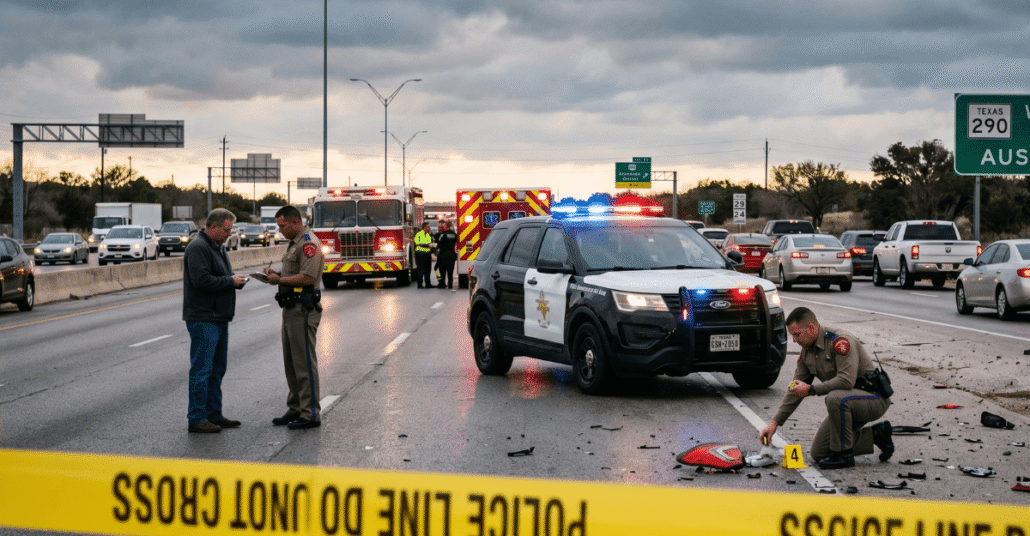
Immediately pull over to a safe location, call 911 to report the fleeing driver, and seek emergency medical evaluation for any injuries. Document the scene by taking clear photographs and gathering contact information from any independent eyewitnesses who observed the collision or the escaping vehicle.
Your physical safety is the absolute priority. Jurisdiction in the Katy area matters significantly for how the crash is officially documented. Incidents within city limits go to the Katy Police Department, while surrounding areas fall under Harris County, Fort Bend County, or Waller County Sheriff jurisdiction. The official crash report generated by these responding agencies is essential, as commercial insurance carriers and your own auto insurer will heavily scrutinize this document when evaluating liability and coverage for a hit-and-run.
You must seek prompt medical evaluation at a local hospital to identify and document all injuries before symptoms are disputed. Adrenaline from the body’s trauma response temporarily suppresses both physical and psychological pain at the scene, delaying the recognition of serious injury. Emergency physicians at Memorial Hermann Katy Hospital or Houston Methodist West can identify a shattered femur on an X-ray within minutes, establishing the necessary medical baseline for your claim.
To build a strong foundation for your case from the moment of impact, take the following immediate steps:
- Photograph the scene completely: Capture skid marks, debris fields, obscured signs, and nearby construction zones on roads like the Katy Freeway to provide critical context for accident reconstruction.
- Collect witness contacts: Independent bystander testimony is highly persuasive when verifying to your insurance company that a phantom vehicle caused the crash.
- Seek emergency medical care: Visit a local Houston-area emergency room immediately to establish that symptoms were reported at the time of injury.
- Preserve all receipts: Any receipts from restaurants or stores visited that evening help establish your location timeline and counter any claims that you were partly at fault.
Can I Recover Financial Compensation If the At-Fault Driver Is Never Found?
You can recover financial compensation through your own auto insurance policy if you carry Uninsured/Underinsured Motorist (UM/UIM) coverage. This specific coverage acts as a direct substitute for the fleeing driver’s missing insurance, allowing you to claim damages for medical bills, lost wages, and physical pain.
Texas law requires insurance companies to offer UM/UIM coverage to all drivers, and you must physically sign a waiver to reject it. In a hit-and-run scenario, your UM coverage treats the unidentified driver as an uninsured motorist. This comprehensive compensation covers current and future medical expenses, lost earning capacity, physical pain, emotional distress, and significant alterations to your overall quality of life, all calculated from the day of the crash forward.
Texas courts generally utilize the multiplier method or the per diem approach to calculate financial compensation for these damages. The multiplier method, the most widely accepted approach in Harris County and Fort Bend County, takes the total verified economic damages and multiplies them by a factor of 1.5 to 5, depending on the documented clinical severity. A catastrophic collision requiring lifelong physical and psychological care justifies a far higher multiplier than a minor crash.
When pursuing compensation through your UM policy, your claim will generally seek recovery across these specific categories:
- Current and future medical costs: Emergency transport, surgeries, physical therapy, and projected long-term care costs including any chronic conditions caused by the crash.
- Lost wages and earning capacity: Compensation for income lost during recovery, plus the projected lifetime loss if permanent disability prevents returning to the same profession.
- Pain and suffering: Physical pain throughout treatment and rehabilitation, quantified based on documented severity.
- Mental anguish and PTSD: Anxiety, depression, and driving phobias that follow a violent crash are compensable non-economic damages requiring documented clinical treatment.
How Do Texas Law Enforcement Agencies Investigate Hit-and-Run Crashes?
Local police departments and county sheriffs investigate hit-and-run crashes by analyzing physical evidence left at the scene, interviewing eyewitnesses, and aggressively reviewing local surveillance footage. They utilize vehicle debris, paint transfer analysis, and traffic camera recordings to identify the fleeing vehicle and track down the responsible driver.
Proving liability against a hit-and-run driver requires demonstrating that they owed a duty of care, breached that duty through reckless or careless actions, and directly caused your injuries. Law enforcement officers understand that fleeing the scene often points to other underlying criminal behavior, such as driving under the influence or operating a stolen vehicle. They will canvass the area around major intersections, searching for ring doorbell cameras in residential areas or commercial security feeds.
If the fleeing vehicle was a commercial truck, such as an Amazon or FedEx delivery van, the investigation becomes more complex but leaves a distinct digital trail. Modern delivery vans record speed, braking, GPS location, and steering angles at the moment of impact—preserving this telematics data immediately is essential. Surveillance cameras at intersections along Mason Road and commercial centers near Katy Mills provide unbiased visual records that can eliminate disputes about liability.
Law enforcement and independent investigators typically focus on gathering the following critical evidence:
- Telematics and black box data: Preserving the electronic footprint of modern commercial vehicles in the vicinity of the crash.
- Surveillance footage: Securing time-stamped video from local Houston-area businesses, traffic lights, and residential security systems.
- Debris and paint transfer: Matching pieces of broken headlights or transferred paint directly to a suspect’s vehicle.
- Body shop notifications: Alerting local Harris and Fort Bend County repair shops to look for specific, matching vehicle damage.
What Are the Criminal and Civil Penalties for Fleeing the Scene in Texas?
Fleeing the scene of an accident involving injury or death is a serious felony offense under the Texas Transportation Code. Criminal penalties include substantial fines and lengthy prison sentences, while civil liability allows victims to pursue maximum financial compensation for their resulting damages and profound emotional suffering.
The law mandates that any driver involved in a crash resulting in injury, death, or property damage must immediately stop their vehicle, render reasonable aid to anyone injured, and provide their contact and insurance information. Failing to fulfill these basic duties escalates a standard traffic collision into a severe criminal matter. If the hit-and-run driver is eventually apprehended, their attempt to escape serves as powerful evidence of negligence and conscious disregard for the safety of others on Texas roadways.
When the fault is unambiguous and well-documented due to the driver’s flight, it removes the insurer’s primary leverage for reducing the non-economic portion of any settlement offer. Furthermore, if the fleeing driver was acting within the scope of their employment—such as an independent contractor making deliveries—liability generally shifts to the third-party logistics company or the individual driver.
The consequences for a hit-and-run driver in Texas are severe and multifaceted:
- Third-Degree Felony: Fleeing a crash that results in serious bodily injury carries a potential sentence of two to ten years in state prison.
- Second-Degree Felony: If the hit-and-run collision results in a fatality, the fleeing driver faces up to twenty years in prison.
- Punitive Damages: In civil court, the gross negligence of fleeing the scene often opens the door for a jury to award punitive damages intended to punish the at-fault driver.
- License Revocation: A conviction for leaving the scene of an accident results in the automatic suspension or total revocation of driving privileges.
What Are the Filing Deadlines for a Hit-and-Run Injury Claim in Texas?
Texas law strictly requires accident victims to file a formal personal injury lawsuit within two years from the exact date of the collision. Failing to initiate formal legal proceedings before this absolute statutory deadline completely bars the injured party from recovering any financial compensation from the at-fault driver or their insurance.
The statute of limitations clock starts running the moment of impact—not when psychological symptoms appear, not when a formal diagnosis is made, and not when the hit-and-run driver is finally identified by law enforcement. Because trauma responses are often delayed, many victims lose valuable preparation time before recognizing they have a viable injury claim.
The timeline becomes drastically shorter if the fleeing vehicle was owned or operated by a municipal entity. Cases involving government vehicles carry drastically shorter windows, sometimes as little as six months. Navigating these aggressive timelines requires immediate professional intervention to ensure your rights to compensation are securely preserved.
To protect your legal standing, you must be aware of these critical deadlines and evidentiary windows:
- Two-year hard deadline: Filing even one day after the two-year anniversary permanently forfeits the legal right to sue, regardless of injury severity.
- Government entity claims: If struck by a public transit bus or municipal truck, Texas law may require formal notice within six months—sometimes sooner, depending on local ordinance.
- Evidence preservation urgency: Surveillance footage, witness contact information, and medical baselines all have much shorter windows than the legal filing deadline.
- Immediate action checklist: File a police report, seek medical evaluation within 48 hours, notify your insurer, and consult an attorney before the insurance company builds its defense.
How Does a Hit-and-Run Collision Impact Your Mental Health and Daily Life?
The sudden shock of a hit-and-run collision frequently causes severe psychological trauma, including persistent anxiety, chronic insomnia, and an intense fear of driving. These emotional injuries disrupt daily routines, strain family relationships, and require professional therapeutic intervention to properly diagnose and legally document for a claim.
Physical injuries are visible and measurable, and psychological injuries are not. Yet the emotional aftermath of a violent collision on the Katy Freeway or Mason Road can be just as disabling as a broken bone. Victims of vehicle collisions frequently experience severe mood swings and amaxophobia, a diagnosable fear of driving that can make commuting on Interstate 10 or Pin Oak Road impossible, directly affecting employment and daily functioning.
The psychological ripples extend outward, disrupting spouses, children, and close family members in documented, legally compensable ways. Texas civil law specifically recognizes this collateral damage through loss of consortium claims that address the deprivation of companionship, affection, and household support. When a Cinco Ranch or Elyson resident develops severe post-traumatic anxiety, the entire household restructures around their limitations.
The invisible costs of a hit-and-run crash manifest in several profound ways:
- Intrusive thoughts and flashbacks: Vivid, involuntary replays of the exact moment of impact that disrupt concentration, work, and sleep.
- Caregiver burden: A family member who must assume driving, childcare, or household responsibilities due to the victim’s limitations suffers quantifiable losses.
- Pediatric trauma: Children who witnessed or experienced the crash may show regression or refusal to enter a vehicle, requiring specialized pediatric therapy at facilities like Texas Children’s Hospital West Campus.
- Emotional withdrawal: Detachment from family, avoidance of social activities in Cinco Ranch or Elyson, and a complete loss of interest in previously enjoyed hobbies.
What Tactics Do Insurance Companies Use to Deny Hit-and-Run Claims in Texas?
Insurance adjusters often attempt to minimize hit-and-run claims by questioning the severity of invisible injuries, disputing the necessity of medical treatments, or arguing that a lack of physical contact between vehicles invalidates the uninsured motorist coverage under your specific auto policy terms.
When dealing with major national insurance carriers, accident victims routinely encounter practiced strategies designed to stall the claim, exhaust the victim’s patience, and protect corporate profit margins. Mental anguish claims are specifically targeted because the injuries are invisible, making them easier to dispute without objective medical records in hand. The preexisting condition argument is the most common weapon in an adjuster’s arsenal. Any documented history of anxiety or depression, even years prior, will be characterized as the true source of current psychological distress, entirely unrelated to the crash on Kingsland Boulevard.
Insurance adjusters specifically target mental anguish claims because they cannot be verified by a simple blood test or X-ray. The most damaging self-inflicted wound in any mental anguish claim is a gap in treatment. If a victim waits three weeks to report feelings of depression or anxiety, the insurer will argue that those symptoms stem from unrelated life events.
Protect your claim by watching out for these common adjuster tactics:
- Preexisting condition challenge: Prior mental health history is seized upon to argue that current distress is merely a flare-up of an old, managed condition unrelated to the crash.
- Social media surveillance: Monitoring public social accounts for any post suggesting normal activity, which is then used to contradict documented claims of depression or anxiety.
- Disputing medical necessity: Adjusters hire independent reviewers to argue that extensive ongoing therapy was unnecessary, and that a few sessions should have been sufficient for recovery.
- Administrative churn: The insurer intentionally reassigns the file to new adjusters repeatedly, resetting negotiations and prolonging financial pressure on the victim.
Protecting Your Future After a Traumatic Collision
The devastating aftermath of a severe vehicle collision involves far more than bent metal, shattered glass, and basic physical recovery. At Will Adams Law Firm PLLC, we clearly know the massive difference between a quick, insufficient settlement and a truly fair one, and we prepare every single case with the intense diligence required to achieve a meaningful, life-changing resolution for our clients. If you or a loved one has been injured by a fleeing driver in Katy, the Energy Corridor, or the greater Houston area, you have dedicated legal options.
Contact us today at (281) 371-4800 for a free and highly confidential consultation to thoroughly discuss your specific legal situation and actively protect your financial future.