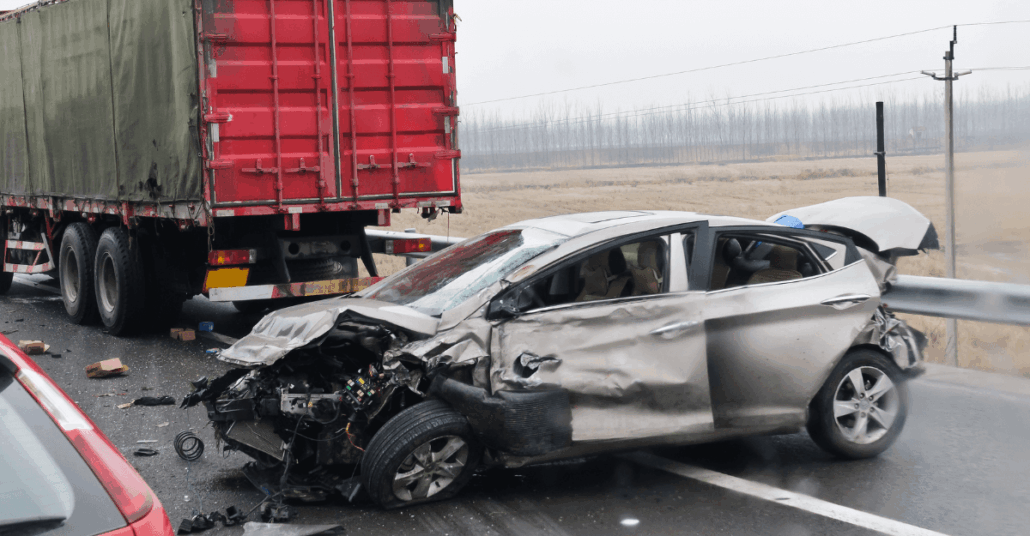
Multiple Parties in Texas Truck Accidents: Who Can You Sue?
A collision with a 40-ton commercial truck on a Texas highway like I-10 or the Grand Parkway is rarely a simple event. The immediate aftermath is one of chaos, and the path to accountability is almost always more complex than it appears. While the truck driver may be the most visible person at fault, they are often just one link in a long chain of corporate decisions that led to the crash. Identifying every responsible party is one of the most important tasks in a commercial trucking lawsuit.
Why Are Commercial Truck Accident Claims So Complicated?
Unlike a typical passenger car accident, which usually involves two drivers and their respective insurance policies, a commercial truck wreck in Texas opens a web of potential liability. The tractor (the truck itself) may be owned by one company, the trailer by another, the cargo by a third, and the driver may be an employee of a fourth.
This complexity is intentional. The commercial shipping industry is built on layers of contracts and subsidiaries designed to insulate the most profitable entities from the risks of the road.
Furthermore, federal and state laws, including the Federal Motor Carrier Safety Regulations (FMCSR), impose specific duties on various parties involved in the transportation of goods. A failure to meet these duties can establish liability. An aggressive defense is guaranteed because the insurance policies involved are often worth millions, and corporations will fight to protect their bottom line.
The Truck Driver: The First Link in the Chain
The most immediate party in any crash is the truck driver. Their negligent actions behind the wheel are often the direct cause of the collision. Common examples of driver negligence include:
- Distracted Driving: Using a phone, GPS, or dispatch device while moving.
- Driver Fatigue: Violating federal Hours of Service (HOS) rules, which limit driving time, and driving while exhausted.
- Speeding: Driving too fast for conditions or in excess of the posted speed limit, which is especially dangerous given a loaded truck’s long stopping distance.
- Driving Under the Influence (DUI): Operating a commercial vehicle while impaired by alcohol or drugs.
- Improper Training: Failing to execute proper turns, check blind spots, or manage the truck’s high center of gravity.
While the driver is almost always a defendant, a case should never end with them. Drivers are often judgment-proof, meaning they have few personal assets to cover the catastrophic damages of a serious wreck. The real accountability lies with the companies that employ, hire, and enable them.
The Motor Carrier (The Trucking Company)
The motor carrier—the company that employs the driver and operates the trucking business—is the primary defendant in most claims. Their liability can be established in two main ways: vicarious liability and direct negligence.
Vicarious Liability
Known in Texas as “respondeat superior,” this legal doctrine holds an employer responsible for the negligent acts of their employee, as long as the employee was acting within the scope of their employment. If the truck driver causes a crash while on the job, their employer is legally responsible for the harm that results.
Direct Negligence
A motor carrier can also be held directly liable for its own corporate negligence. This means the company itself failed in its duties, and that failure was a cause of the accident. This is a vital area of investigation.
Examples of direct negligence by a trucking company include:
- Negligent Hiring: Hiring a driver with a known history of DUIs, speeding tickets, or previous at-fault accidents.
- Negligent Training and Supervision: Failing to properly train drivers on safety protocols or failing to monitor their Hours of Service logs for violations.
- Negligent Maintenance: Failing to properly inspect, repair, and maintain the truck fleet, leading to mechanical failures of components like brakes, tires, or steering systems.
- Failing to Enforce Safety Policies: Creating a corporate culture that prioritizes speed and profit over safety, such as pressuring drivers to meet unrealistic deadlines that require speeding or skipping mandatory rest breaks.
- Violating FMCSA Regulations: Ignoring federal rules regarding vehicle inspections, driver qualifications, or drug and alcohol testing.
Who Else Could Be Liable? Identifying Third-Party Defendants in Trucking Crashes
In the aftermath of a catastrophic truck accident, the immediate focus is often on the truck driver and the motor carrier. While these parties are frequently the primary defendants, a thorough investigation often reveals other corporations whose negligence played a significant role in the crash. In the legal world, identifying every potential source of recovery is not just a strategic choice—it is a necessity. Suing all responsible third parties is essential for ensuring a client can be fully compensated for their medical bills, lost wages, and long-term suffering.
Because trucking operations involve a complex web of contracts and sub-contracts, liability is rarely limited to a single person. Here is an in-depth look at the most common third-party defendants in commercial vehicle litigation.
Shippers and Loaders
The movement of goods involves more than just a truck and a driver. The company that owned the cargo (the shipper) or the warehouse staff tasked with putting that cargo onto the trailer (the loader) can often be held liable.
Proper cargo securement is a matter of life and death on the highway. If a trailer is overloaded, it puts undue stress on the braking system and tires, significantly increasing the stopping distance. If the load is unbalanced, it can cause the trailer to sway or lead to a “jackknife” event during a turn. Furthermore, if the cargo is not secured with the correct straps, chains, or bracing, it can shift during transit. A sudden shift in weight can cause a driver to lose control of the vehicle instantly. When these errors occur at the point of origin, the shipper or loader may be held responsible for the resulting disaster.
Freight Brokers and Logistics Companies
Freight brokers act as the “middlemen” of the shipping industry, connecting shippers who have goods with motor carriers who have trucks. While they do not own the trucks themselves, they have a legal duty to exercise “reasonable care” when selecting a carrier.
Some brokers prioritize profit margins over public safety, negligently hiring motor carriers with notoriously bad safety records simply because they are the cheapest option. If a broker ignores a carrier’s history of “unsatisfactory” safety ratings, repeated hours-of-service violations, or high crash rates, the broker can be held liable for “negligent selection.” When that unsafe carrier causes a crash, the broker who funneled work to them becomes a critical defendant in the pursuit of justice.
Truck and Parts Manufacturers
When a mechanical failure leads to a crash, the issue may go back to the factory where the vehicle was built. In these cases, the manufacturer of the truck or a specific component part can be a defendant in a product liability claim. Unlike general negligence, product liability often focuses on whether a part was “unreasonably dangerous” due to a design or manufacturing flaw.
Common defective components include:
- Defective Braking Systems: Air brakes that fail under normal pressure or components that overheat due to poor design.
- Tire Blowouts: Tires that delaminate or explode because of manufacturing flaws rather than road wear.
- Faulty Steering or Suspension: Components that snap or seize, depriving the driver of the ability to steer the 80,000-pound vehicle.
- Trailer Couplings (The Fifth Wheel): If the mechanism that attaches the trailer to the tractor is defective, the trailer can detach and become a “loose missile” on the highway.
- Design Flaws: This includes “underride” guards that fail to prevent smaller cars from sliding under a trailer during a collision.
Maintenance and Repair Facilities
Many motor carriers do not employ their own mechanics. Instead, they outsource their maintenance and inspections to third-party repair shops. These facilities are professionals held to a high standard of care.
If a shop performs a faulty brake job, incorrectly installs a tire, or fails to identify a serious mechanical issue during a mandatory inspection, it can be held directly liable for the resulting mechanical failure. In many cases, a repair shop may claim they fixed a problem on a “repair order,” but forensic evidence from the crash site proves the work was never actually performed. Uncovering these discrepancies is a vital part of the discovery process.
Warehouse and Facility Owners
Not all truck accidents happen on the open highway. Many occur on private property, such as loading docks, distribution centers, or truck stops. In these instances, the owner of the property may be liable under the theory of “premises liability.”
Property owners must maintain a safe environment for the drivers and visitors who enter their facilities. Liability may arise from:
- Poor Lighting: Making it impossible for drivers to see pedestrians or other vehicles during night operations.
- Unmarked Hazards: Failure to warn drivers about low-clearance areas, sinkholes, or hidden obstacles.
- Dangerous Traffic Patterns: A poorly designed facility that forces heavy trucks to cross paths with passenger vehicles or pedestrians in an unsafe manner.
- Inadequate Dock Safety: Failure to use wheel chocks or vehicle restraints that prevent a truck from pulling away while it is still being loaded.
Government Entities and Contractors
In some scenarios, the road itself is the problem. If a crash is caused by a massive pothole, a missing stop sign, or an improperly marked construction zone, a government entity or a private road contractor may be to blame.
Suing a government body involves unique challenges, such as “sovereign immunity” and much shorter deadlines for filing a “notice of claim.” However, if a road was designed with a dangerous curve that lacks proper banking, or if a construction company left debris in the travel lanes, these parties must be held accountable for the hazards they created.
The Importance of a Multi-Party Investigation
Identifying these third-party defendants requires an aggressive and immediate investigation. Evidence such as “black box” data (ECM), driver logs, maintenance records, and shipping manifests can disappear or be destroyed if not preserved quickly.
By looking beyond the driver’s seat, legal teams can uncover a chain of negligence that stretches across multiple corporations. This comprehensive approach ensures that the burden of the loss is placed on every company that contributed to the tragedy, providing the injured party with the best possible chance at a full and fair recovery.
Can a Government Entity Be at Fault for a Truck Accident?
Yes, though these cases are challenging. In Texas, government entities (like TxDOT or a municipality) are often protected by “sovereign immunity.” However, this immunity can be waived for specific claims, such as those arising from “a condition or use of tangible personal or real property.”
A government entity could be a liable party if the crash was caused by:
- Dangerous Road Design: A highway on-ramp that is too short for a truck to safely merge, or a turn that is too sharp.
- Road Defects: A massive, known pothole or a stretch of road that consistently floods without proper drainage or warnings.
- Missing or Inadequate Signage: The failure to place a stop sign, a warning for a steep grade, or a reduced speed limit sign in a known high-accident area.
Proving government liability requires showing the entity knew or should have known about the dangerous condition and failed to correct it.
How Do Lawyers Uncover All Responsible Parties?
Identifying these hidden defendants is not possible without an immediate and comprehensive legal investigation. The trucking company and its insurance carrier dispatch rapid-response teams to the scene to control the narrative and the evidence. A victim needs a team doing the same for them.
Here are the steps a knowledgeable trucking law firm takes to identify all liable parties:
- Send Spoliation of Evidence Letters
This is the most important first step. We immediately send formal legal notices to the motor carrier and all known parties, demanding they preserve the truck, its black box, driver logs, maintenance records, and all other evidence. This prevents them from “accidentally” destroying evidence. - Download and Analyze Black Box Data
We deploy experts to download the data from the truck’s Event Data Recorder (EDR), or “black box.” This data provides objective facts about the truck’s speed, braking, RPM, and other actions in the moments before impact. - Conduct a Full Vehicle Inspection
Our engineers and reconstructionists inspect the physical truck to find evidence of mechanical failure, faulty maintenance, or defective parts. - Subpoena Corporate Records
Through the discovery process, we demand all internal records. This includes the driver’s qualification file, drug test history, training manuals, fleet maintenance reports, and post-crash inspection results. - Analyze Shipping and Brokerage Contracts
We trace the entire chain of custody for the cargo, reviewing the contracts between the shipper, broker, and motor carrier to establish the relationships and duties of each party. - Interview Witnesses and First Responders
We gather statements from anyone at the scene to build a complete picture of the event.
What Are “Shell Companies” and How Do They Affect My Claim?
One of the most deceptive tactics used by motor carriers is to create a “shell game” of related corporations. They may set up one company, “ABC Logistics,” to be the broker, another, “ABC Trucking,” to hire the drivers, and a third, “ABC Leasing,” to own the trucks and trailers.
They do this so that if a driver from “ABC Trucking” causes a massive accident, the victim can only sue that entity, which has been intentionally kept with few assets and a minimal insurance policy. The “Leasing” and “Logistics” companies, where the real money is, claim to be separate and not responsible.
A key part of complex truck litigation is “piercing the corporate veil.” This involves proving to a court that these separate companies are, in fact, a single enterprise, allowing the victim to pursue the assets of the entire operation.
What Damages Can Be Recovered in a Multi-Party Claim?
When multiple parties are at fault, a victim can seek compensation for the full range of their losses. In Texas, damages are categorized into three types:
Economic Damages
These are the verifiable financial losses from the accident.
- Past and future medical expenses (including surgery, rehabilitation, and long-term care)
- Lost wages from time missed at work
- Loss of future earning capacity if you are permanently disabled
- Property damage to your vehicle
Non-Economic Damages
These compensate for the intangible, human losses from the crash.
- Pain and suffering
- Mental anguish
- Physical impairment
- Disfigurement and scarring
Exemplary (Punitive) Damages
In cases of extreme negligence, a jury may award exemplary damages. These are not meant to compensate the victim but to punish the defendant and deter similar conduct. This may apply if a company knowingly allowed a driver with multiple DUIs to get behind the wheel.
Contact Our Katy, TX Trucking Accident Law Firm Today
After a devastating truck accident, the driver may be the only person you see, but they are far from the only party who should be held responsible. The fight for justice is not against a single driver; it is against a network of corporations and their experienced legal teams. If you or a family member has been injured in a collision with an 18-wheeler in the Katy, Harris County, or Fort Bend County area, you need a legal team that focuses on this specific, complex area of law.
Contact the Will Adams Law Firm today at (281) 371-6345 for a free and confidential consultation. Let us begin the investigation immediately to preserve evidence and identify every party responsible for your harm.