Can a Car Accident Cause a Herniated Disc?

A herniated disc is a relatively common back or neck injury with a wide range of severity. No matter how mild or severe the injury, discomfort from a herniated disc can affect your quality of life, limit your movement, and force you to evaluate your pain management options.

A woman holding her neck in pain while getting out of a carCar accidents can and frequently do cause herniated disc injuries. If you’re experiencing symptoms of a herniated disc following a car accident, you shouldn’t ignore the pain. Make sure to see a doctor immediately and carefully follow their treatment plan.

And if you suffered your herniated disc injury in a car accident and someone else’s negligence caused the crash, you may be able to file a personal injury claim. Filing a claim can help you recover compensation for your medical bills, damages, lost wages due to the accident, and pain and suffering.

Because herniated disc claims can be complex and challenging to prove, you should schedule a free consultation with a car accident lawyer if you’ve suffered a herniated disc in a crash. The attorneys at Will Adams Law Firm have worked with many clients in your situation. We understand your pain, and we’ll work hard to see that you receive fair compensation for your injuries and losses.

What Is a Herniated Disc?

A woman showing a doctor where her back pain is locatedThe spine is a very complex and important structure that stretches from your neck to your lower back. Your spine consists of bones called vertebrae, a spinal cord full of nerves, and many other components like muscle that help hold everything in place. Your spine also contains discs, which are small cushions between the vertebrae that keep the spinal bones from pushing on each other.

Sometimes, these discs can bulge or rupture due to injury or long-term wear and tear on the body. This injury is known as a herniated disc, but it can also be called a bulging disc, ruptured disc, slipped disc, or prolapsed disc. A car accident can easily cause the types of pressure or trauma to the spine that may result in a herniated disc.

Disc herniation most often happens in the discs of the lower back, also known as the lumbar spine. But any disc in your spine can suffer herniation, even the discs in your cervical spine (which is the upper area of your spine in your neck).

Herniated discs can produce various types of pain and symptoms, including:

  • Pain and numbness, often on one side of the body
  • Pain that extends to your arms or legs
  • Pain that worsens at night or with certain movements
  • Pain that worsens after standing or sitting
  • Pain when walking short distances
  • Unexplained muscle weakness
  • Tingling, aching, or burning sensations in the affected area

How Delayed Back Pain Affects Your Personal Injury Case

A woman reading paperworkBecause the spine is so complex and so vital to the human body, spinal injuries are often very complex as well. And the symptoms of a spinal injury can be very hard to predict.

In some cases, a person may feel fine for weeks following a car accident. Then, they suddenly experience back pain that was directly caused by the accident. Sometimes, because of the delay in onset of symptoms, these victims don’t even realize that the accident caused the injury and the pain they’re feeling.

If you experienced delayed symptoms following a car accident, the negligent party and their insurance company may try to argue that your injuries are not serious since you didn’t seek medical treatment right away. So, it’s critically important to see a doctor right away following any car accident, and it’s also important to follow up with your doctor when any new symptoms show up. A medical expert may be able to use imaging (like an MRI) and other tests to prove that you experienced a herniated disc.

In Texas, the statute of limitations for personal injury claims, including car accident, is two years. This means you only have two years from the date of a car crash or other accident to file a claim against the negligent party’s insurance. It takes time to build a case and file a claim, so the sooner you contact an attorney for help after a crash, the better.

Can I Still File a Claim for a Herniated Disc Injury in Texas if I Had Pre-Existing Back Pain?

If you were experiencing back pain from a herniated disc before the accident, it is very likely that the accident made it worse. In fact, any type of back pain is very likely to get worse following a car accident.

Maybe you had a herniated disc before the crash, but it was responding well to medication and rest. Now, because of the accident, your doctor says your injury has gotten worse. You need surgery and won’t be able to work for months. So, can you recover damages from the car accident if you had a pre-existing condition?

The answer is yes. In Texas and elsewhere, when a negligent party causes a car crash or other accident that leaves you injured, you’re entitled to compensation for the resulting damages — even if you had pre-existing conditions that caused your injuries to be worse than they might have been if you were perfectly healthy.

How Much Compensation Can I Get for My Herniated Disc?

A couple reviewing paperwork with a car accident attorneyMany factors affect how much compensation you can recover in a personal injury claim. A herniated disc can have a wide range of treatment options and outcomes that affect the costs involved. In general, the more severe your injury and the more extensive your medical treatment, the more compensation you can potentially recover.

In some cases, the insurance company will try and offer you a sum of money to settle your claim; this sum is called a settlement. When evaluating a settlement offer, it’s important to consider where it truly addresses your current and future medical costs and losses, including ongoing physical therapy. Remember that the insurance company will not offer you a settlement out of generosity. Their goal is to make your claim go away while paying you as little as possible.

If you have permanent disability or nerve damage because of the accident, any settlement offer should account for those long-term effects. Any time off work, including time missed due to the accident or for medical appointments, should be compensated. And a fair settlement offer should also compensate you for your pain and suffering.

Most importantly, you should always work with an experienced attorney when trying to determine fair compensation for your injuries or evaluating a settlement offer from the insurance company. No attorney can estimate your potential compensation without knowing the unique facts of your case. Take advantage of your free consultation with Will Adams Law Firm to get a better idea of what kind of compensation you may be able to recover for your injuries.

A Skilled Personal Injury Lawyer Can Help With Complex Back Pain Cases

If the facts of the accident are clear and only one driver is responsible for the accident, then in theory, dealing with insurance shouldn’t be complicated. However, this is rarely how things play out in the real world. Car crashes can be complicated events, and often, each driver bears some of the responsibility.

Texas law establishes proportionate responsibility, which means that if you bear some of the fault, you cannot recover full damages from the other party. If the other driver is only 60% at fault for the accident, then you can only recover 60% of the total amount of damages from them or their insurance company.

Because of this rule, the insurance company will often try to argue that you were at fault to some degree for your injuries. The more they can put the blame on you, the less they have to pay you. The insurance company may also try to deny the severity of your injuries or argue that some or all of your medical treatment was unnecessary. To fight back against these tactics, you’ll need detailed evidence and strong arguments.

A good personal injury attorney will have experience investigating a crash, gathering the necessary evidence, and translating that evidence into winning arguments. And solid evidence and arguments don’t just help your case in court. If your attorney can show the insurance company that you are serious about pursuing full compensation and that you have strong evidence on your side, then the insurance company is more likely to make a fair settlement offer before the case ever goes to a trial.

Will Adams Law Firm Is on Your Side

We understand that back injuries are incredibly serious, and we know how stressful life can be following a car accident. Will Adams Law Firm is on your side, and we’ll work to help you recover the compensation you deserve for your herniated disc.

If you’d like to speak with one of our lawyers, we offer a free consultation. An attorney from our team will listen to your story and inform you about your rights and legal options at no cost to you.

To speak with one of our compassionate, hard-working attorneys, please call (281) 371-6345 or complete our quick contact form today.

Reference

Slipped (herniated) disc. n.d. Healthline.  https://www.healthline.com/health/herniated-disk

The content provided here is for informational purposes only and should not be construed as legal advice on any subject.

Amazon Delivery Driver Accident Claims: Everything You Need to Know

Many of us have become reliant on Amazon for our shopping needs. But our love of two-day delivery has its downsides. Our roadways are getting more and more congested with delivery vehicles, which means Amazon delivery truck accidents are becoming more common.

multiple Amazon delivery trucks driving on the highwayIf you were involved in a car accident with an Amazon delivery driver, you may have questions about whether Amazon is liable for your lost wages, medical bills, and pain and suffering. However, the answer will vary depending on your situation.

As one of the largest companies in the world, Amazon aggressively protects itself from liability. The company’s delivery systems are structured in a way to shift responsibility away from the multi-billion-dollar company, which can leave injured parties and their families in a bind.

Will Adams Law Firm fights for individuals who were harmed by commercial drivers, helping them get the answers and compensation they deserve. In this article, we explore the complicated factors that might affect your Amazon delivery truck accident claim.

The Logistics of Liability: Analyzing Amazon’s Reliance on Independent Contractors

The “last mile” of delivery represents the final, most expensive, and most complex leg of the e-commerce journey—the movement of a package from a local fulfillment center to the customer’s doorstep. For Amazon, the undisputed titan of global retail, the solution to this logistical bottleneck has not been to build a massive internal fleet of company-employed drivers. Instead, Amazon has pioneered a decentralized model that relies heavily on independent contractors and third-party entities. This strategy allows for unprecedented scale, but it also creates a contentious landscape of legal liability, worker rights disputes, and public safety concerns.

The Mechanics of the “Last Mile”

Most consumers see a blue van or a personal vehicle and assume the driver is an Amazon employee. In reality, the vast majority of these drivers work for Delivery Service Partners (DSPs)—independent businesses launched specifically to fulfill Amazon contracts—or are individuals participating in the Amazon Flex program. Under this arrangement, Amazon avoids the overhead costs of vehicle maintenance, benefits, and payroll taxes for hundreds of thousands of workers.

To participate, these contractors and DSP owners must meet rigorous criteria. They are required to carry substantial commercial liability insurance and strictly adhere to Amazon’s branding and operational standards. A central pillar of this partnership is the indemnity agreement: by signing the contract, the independent entity assumes full legal and financial responsibility for any accidents or property damage that occur during the delivery process. On paper, this creates a clean break between Amazon’s corporate assets and the risks of the road.

The Paradox of Control

The legal definition of an “independent contractor” usually hinges on the level of autonomy the worker possesses. However, the relationship between Amazon and its contractors is famously rigid. While Amazon classifies these drivers as independent to limit liability, it maintains a granular level of control over their daily operations that rivals traditional employment.

Amazon utilizes sophisticated algorithmic surveillance to direct the “last mile.” Drivers are tracked via GPS; their speed, braking patterns, and even “engine idle” times are monitored. AI-powered cameras inside many vans track driver behavior, such as eye movement and seatbelt usage. Furthermore, the routes are not suggestions; they are strictly choreographed sequences determined by Amazon’s software. This creates a “paradox of control” where the company dictates exactly how the work is done but claims no responsibility for the worker doing it.

The Human Cost of Algorithmic Pressure

The efficiency of Amazon’s delivery machine is fueled by high-intensity expectations. DSPs are often held to “unattainable goals,” requiring drivers to deliver hundreds of packages in a single shift. In many cases, the delivery windows are so tight that drivers report skipping meals or bathroom breaks to stay on schedule.

When workers are overworked and under extreme stress, the psychological toll translates into physical risk. To meet quotas and avoid being “off-boarded” by the algorithm, drivers may cut corners—speeding through residential neighborhoods, rolling through stop signs, or parking illegally. These decisions, driven by the pressure of the platform, significantly increase the likelihood of collisions. When an accident occurs, the driver is often the one left facing the consequences, despite the fact that their behavior was a direct response to the parameters set by Amazon’s software.

Shifting the Burden of Liability

The primary strategic advantage of this model for Amazon is risk insulation. By utilizing a web of thousands of small DSPs, Amazon creates a “liability shield.” When a delivery van causes a catastrophic injury, Amazon’s legal team frequently argues that the retail giant cannot be sued because it did not employ the driver. This forces victims to seek damages from the smaller contractor, whose insurance coverage may be significantly lower than Amazon’s multi-billion-dollar treasury.

This legal strategy has faced increasing scrutiny in the courts. Plaintiffs’ attorneys are increasingly using the “vicarious liability” or “agency” doctrine, arguing that because Amazon exercises such pervasive control over the drivers’ work, they are employees in everything but name. If the courts begin to consistently rule that these drivers are “de facto” employees, the financial implications for Amazon’s logistics model would be transformative.

The First Steps You Need to Take After an Amazon Delivery Truck Accident

a woman with a cast on her leg and crutches talking on the phoneSo, how do you ensure that you get the compensation and answers you deserve after an Amazon delivery truck accident? Regardless of who was at fault, or who was involved in the auto accident, it is very important to follow these steps.

  • Get yourself to safety. If there are any injuries or property damage, call 911 to get emergency help.
  • Cooperate with the police. They will take official statements and create an accident report. This may be very useful for insurance claims, and if needed, settlement negotiation or court cases.
  • Make sure to get contact information and auto insurance information from the other party. If the other driver is on the clock, the insurance should be their employer’s auto policy.
  • Document as much as you can. Take photographs and videos of the scene, including the damage and the license plates. Take note of any nearby cameras that may have captured the events. Get contact information from any witnesses. These can all be used for accident reconstruction.
  • Keep good records from the accident. Collect any bills, receipts, and doctor’s notes that you might have. These documents will be essential when calculating your financial losses.
  • If you have aches and pains, see a doctor. Injuries may not present themselves right away, or the pain may be masked by adrenaline. Even if you don’t feel hurt, it is always a good idea to be checked out by a doctor, especially if the vehicle damage is severe. And follow your doctor’s treatment plan as closely as possible.
  • Consult with a personal injury lawyer. Before you file a claim with the at-fault driver’s insurance policy, it’s a good idea to talk to an attorney. You can (and should) schedule a free, no-risk consultation with a reputable personal injury law firm.

The time following an accident can be very confusing and stressful. If you’re feeling overwhelmed or need help managing all the insurance company’s demands, Will Adams Law Firm can help.

Injured by an Amazon Delivery Driver? Consult with a Car Accident Lawyer

a woman talking on the phone with a lawyer after a crash with an amazon delivery vehicleWhile people should consult with a personal injury lawyer after any car accident, this is especially true after a wreck with an Amazon delivery driver. An attorney can help you identify each and every insurance policy that covers your claim, document your injuries, and calculate your losses.

For example, depending on your circumstances, you and your loved ones might have claims with the following insurance policies:

  • The truck driver’s or company’s liability policy
  • Liability policies of other at-fault drivers who contributed to the crash
  • Your personal injury protection policy
  • Uninsured/underinsured motorist coverage
  • Manufacturers and other businesses who helped distribute defective or dangerous car or truck parts (if they contributed to the wreck)
  • Other sources of insurance coverage

A skilled car accident lawyer, like those at Will Adams Law Firm, will dig into the facts of the situation, including asking for GPS data about how fast the delivery vehicle was moving at the time of the accident, the maintenance records for the vehicle, and the delivery driver’s driving history. These can all be critical to building your case, to prove liability and show why you deserve compensation for the damages you sustained during the auto accident.

Then, they will negotiate with each insurance company, fighting to get you the compensation you deserve. And if the insurance company refuses to offer a fair settlement, a personal injury lawyer can help you present your legal claims to a judge and jury.

How Can Amazon Avoid Liability for Its Delivery Drivers’ Mistakes?

Even though Amazon consistently argues that they are not responsible for its contractors’ actions, many lawyers disagree with them. It is well documented that Amazon pushes its delivery drivers to spend long hours on a tight delivery schedule. They monitor their progress, push them to move quickly, and forbid them from working for anyone other than Amazon. To many, this sounds more like an employer-employee relationship than a contractual partnership.

The team at Will Adams Law Firm is monitoring a variety of lawsuits challenging Amazon’s relationship with its independent contractors.

Will Adams Law Firm Can Help You After an Amazon Delivery Vehicle Car Accident

At Will Adams Law Firm, we have experience in handling difficult claims like the ones that may occur when an Amazon delivery vehicle causes an accident. We’re committed to helping you with your recovery, by showing you respect and standing up for you against those who are responsible.

For a private, free consultation with one of our attorneys, please call our office at 1-800-559-0593 or fill out this brief form. We want to help you get the compensation you deserve, so contact us today to get started.

References

Callahan, P. (2019, September 6). Amazon pushes fast shipping but avoids responsibility for the human cost. New York Times. Retrieved from https://www.nytimes.com/2019/09/05/us/amazon-delivery-drivers-accidents.html

Greene, J. (2020, November 27). Amazon’s big holiday shopping advantage: An in-house shipping network swollen by pandemic-fueled growth. The Washington Post. Retrieved from https://www.washingtonpost.com/technology/2020/11/27/amazon-shipping-competitive-threat/

The content provided here is for informational purposes only and should not be construed as legal advice on any subject.

Failure to Yield the Right of Way in Texas: Who Is At Fault?

Intersections are dangerous places in Texas. In 2021, state authorities documented roughly 147,000 crashes involving failure to yield or violations involving traffic control devices (like stop lights, stop signs, and yield signs). In many of those crashes, innocent people were injured or killed.

Our experienced car accident lawyers have seen firsthand how a failure to yield crash can change your life forever. We support injured motorists and their families, and help hold at-fault drivers and companies accountable for their negligence.

Unfortunately, most people aren’t 100% sure what to do when they reach an intersection, roundabout, or traffic control device. In this article, we explain Texas’ rules of the road and personal injury laws apply after someone fails to yield the right of way.

Failure to Yield and Right of Way Laws in Texas

a car turning rightIn Texas, failure to yield while turning left was the fifth most common accident cause in 2021, followed by failure to yield at a stop sign as the sixth. This is because many drivers roll through stop signs, speed through intersections, and make improper left turns.

Most of Texas’ rules of the road are outlined in the Texas Transportation Code. There are multiple statutes that deal with the flow of traffic and who has the right of way.

  • Texas Transportation Code §545.151: Vehicles approaching or entering an intersection
  • Texas Transportation Code §545.152: Vehicles turning left
  • Texas Transportation Code §545.153: Vehicles entering an intersection with a stop or yield sign
  • Texas Transportation Code §545.154: Vehicles entering or leaving a limited-access or controlled access highway
  • Texas Transportation Code §545.155: Vehicles entering a highway form a private road or driveway
  • Texas Transportation Code §545.156: Vehicles that are approached by an authorized emergency vehicle (like an ambulance or fire truck)

These rules (and others) outline exactly who has the right of way on Texas’ roads. However, we know that it can be hard to understand all the legalese in a statute. So, our failure to yield lawyers have broken down our state’s laws into plain language.

Common Right of Way Situations in Texas

The team at Will Adams Law Firm is committed to improving road safety. Here are some common right of way situations you might come across while behind the wheel:

  • Official traffic control devices: Traffic lights, yield signs, and other traffic signals assign preferential right of way in a certain direction. You must obey these signs. That means coming to a complete stop at a stop sign or yielding to oncoming traffic at a blinking yellow light. (And you should never enter an intersection—especially if you’re turning left—unless it is safe to do so.)
  • Four Way Stops: Whoever stopped first has the right of way at a four way stop. If two vehicles stop at the same time, the vehicle on the right has right of way.
  • Left Turns: The vehicle turning left must yield to vehicles that are already in the intersection or vehicles close enough to be an immediate hazard, like oncoming traffic.
  • Roundabouts: Drivers must yield to vehicles already in the roundabout before entering the roundabout themselves.
  • Yield Signs: A driver must slow their speed to what is reasonable under the current conditions when approaching a yield sign, then yield right of way to any vehicle in the intersection or close enough to be an immediate hazard.
  • Merging On-Ramps: When entering a highway or freeway, the merging driver must yield to the traffic on their left when entering from the on-ramp.
  • Crosswalks: Drivers must always yield to pedestrians in the crosswalk.
  • Special vehicles: Drivers must yield to emergency vehicles, stopped school buses and funeral processions.

Busy intersections can have many vehicles to pay attention to, and can be treacherous situations for even the most careful motorist. Add in a visual impairment, like a big truck, or hazardous weather conditions, and it’s no wonder that this is such a common type of accident.

What Should I Do After a Failure to Yield Accident?

a driver making a turnIf you or someone you love is involved in a failure to yield crash, you can take some simple steps to protect your family.

  1. Call 911: If someone was injured or a vehicle is damaged, you should immediately call 911. They will send a police officer and other first responders to the crash scene.
  2. Cooperate with the authority’s investigation: Make sure you give an accurate and honest explanation of what happened during the crash. The police officer will create a crash report, assign blame for the failure to yield crash—this will become important evidence if you need to file a personal injury claim.
  3. Document the crash scene: Take pictures, write down witnesses’ contact information, and do your best to memorialize the crash scene. Your lawyer will use this information to strengthen your injury claims and hold the at-fault parties accountable for their negligence.
  4. Seek medical treatment: If you feel any discomfort, get medical care. Sometimes, those minor “aches and pains” are early signs of a serious injury.
  5. Consult with a failure to yield attorney: A lawyer can help get justice and ensure that you recover fair compensation for your losses.

What Is the Punishment for Failing to Yield the Right of Way in Texas?

a police officer talking with a driver after a failure to yield right of way accidentSomeone who does not yield the right of way might face both civil and criminal sanctions. First, simply failing the yield the right of way is a Class C misdemeanor in Texas, and you might face fines, points on your license, and other criminal penalties.

But if your failure to yield causes injuries or a fatality, you could be facing much more severe penalties. In addition to criminal charges, the injured person and their family can file a personal injury lawsuit against you—demanding compensation for their financial and emotional losses.

Who Is Financially Responsible for Injuries After a Failure to Yield?

In most situations, the liability for a right of way accident belongs to the driver that failed to yield. The Texas Transportation Code notes that failing to yield the right of way at an intersection, especially one with a stop sign or yield sign, is “prima facie” evidence of negligence. (This means that judges and juries will assume that the person who ignored the official traffic control device is negligent unless that can prove otherwise.)

However, if you or someone you love was injured at an intersection, do not assume that the at-fault driver is the only responsible party.

A car accident lawyer can help you investigate your claim and might identify additional sources of insurance coverage:

  • Employers: If the at-fault driver was driving a commercial vehicle or was in the course of their employment, you might have a liability claim against their employer. Often, companies carry much larger insurance policies that individual Texans.
  • Property owners: Sometimes, poorly designed or obstructed driveways contribute to wrecks. Our team can help you determine whether a property owner is liable for your injuries.
  • PIP (Personal Injury Protection): Most drivers in Texas carry at least some level of this no-fault insurance. We can help you file a PIP claim with your own insurance company, demanding reimbursement of some of your medical bills and lost income.
  • Uninsured and Underinsured Motorist (UM/UIM) Coverage: If the at-fault parties’ policies do not fully cover your losses, you might be able to file a claim with your own UM/UIM policy.

However, don’t expect the insurance companies to give up without a fight. It’s not uncommon for adjusters to blame innocent people for intersection crashes. They might cite Texas’ rules about comparative fault in an attempt to save money.

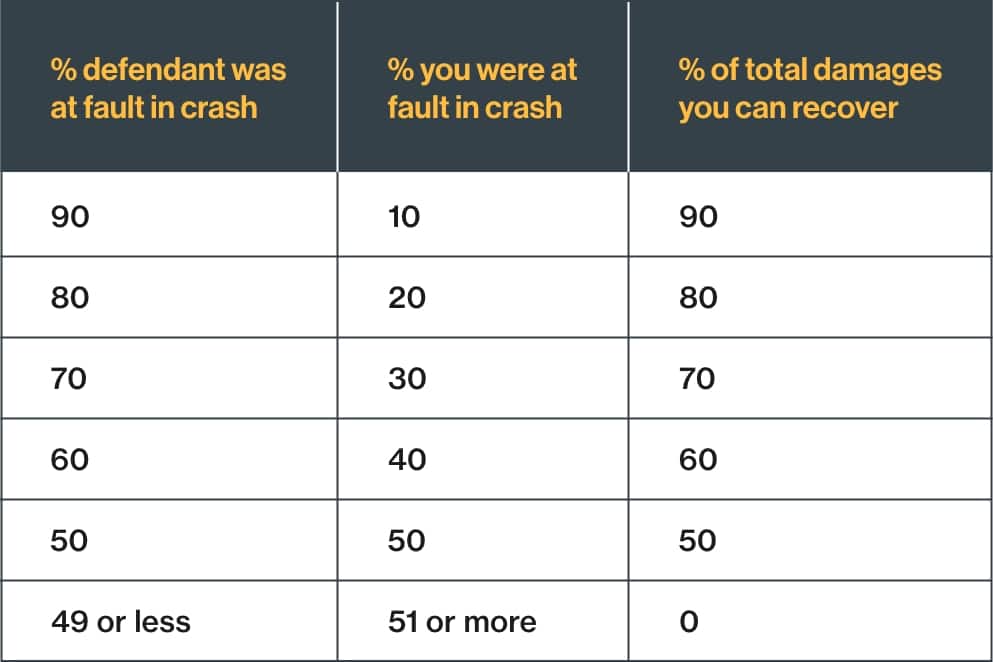
Under this rule, an insurer can reduce your settlement or jury award by your percentage of fault. So, if you were 30% responsible for the crash, the adjuster can reduce your compensation by 30%. And, if you hold at least 51% of the blame, the insurance company doesn’t have to pay you at all. However, don’t panic if the adjuster tries to unfairly shift blame to you—an experienced, aggressive lawyer can help you respond to their allegations and fight back.

How a Car Accident Lawyer Can Help

discussing a failure to yield right of way crash with an attorneyOften, the at-fault driver will try to avoid taking responsibility when a collision occurs. The police report of the accident will carry weight with insurance companies, so if the police believe the other driver is not at fault, you may struggle to receive the right help with auto repairs, medical bills, and more.

When this happens, it is crucial to enlist the support of a car accident attorney. An experienced lawyer, like Will Adams, knows how to dig deep to find out what really happened. Our firm has the knowledge and skills to help hold the responsible driver accountable.

If you’ve been injured in a right of way car accident, your medical bills can be overwhelming. By taking your case to a car accident lawyer, you know that you have someone compassionate on your side, who will work hard to make sure that you receive the compensation you deserve.

Injured in a Failure to Yield Accident? Call Will Adams Law Firm for a Free Consultation

At Will Adams Law Firm, we know that the period of time following an accident can be extremely stressful. Injuries, loss of transportation, medical bills and disruption to your work schedule can take an enormous toll. Let us put in the hard work for you, so you can focus on your recovery.

We offer a free consultation to discuss your case, so you can find out your legal options risk-free. To get started, please call us at (281) 371-6345 or complete this brief form. Don’t wait another day to let Will Adams Law Firm put our experience to work for you.

References

Crash Contributing Factors.(2022, May 2). Texas Department of Transportation. Retrieved from https://ftp.dot.state.tx.us/pub/txdot-info/trf/crash_statistics/2021/21.pdf

Tex. Trans. Code §545.151 (2003) Retrieved from https://statutes.capitol.texas.gov/Docs/TN/htm/TN.545.htm

Tex. Trans. Code §545.152 (1995) Retrieved from https://statutes.capitol.texas.gov/Docs/TN/htm/TN.545.htm

Tex. Trans. Code §545.153 (1995) Retrieved from https://statutes.capitol.texas.gov/Docs/TN/htm/TN.545.htm

Tex. Trans. Code §545.154 (1995) Retrieved from https://statutes.capitol.texas.gov/Docs/TN/htm/TN.545.htm

Tex. Trans. Code §545.155 (1995) Retrieved from https://statutes.capitol.texas.gov/Docs/TN/htm/TN.545.htm

Tex. Trans. Code §545.156 (1995) Retrieved from https://statutes.capitol.texas.gov/Docs/TN/htm/TN.545.htm

The content provided here is for informational purposes only and should not be construed as legal advice on any subject.

When Do You Need a Motorcycle Lawyer in Texas, and Why?

Motorcycle accidents aren’t like other vehicle accidents—and not just because the injuries are much more likely to be catastrophic. Motorcycle riders often face additional challenges when attempting to secure fair compensation for an accident, from difficulty collecting evidence to anti-biker prejudice.

when do you need a motorcycle lawyerThe last thing you need as you heal is a legal battle that feels like a wild goose chase, which can happen if you try handling the early stages of a motorcycle accident case yourself.

One of the best things you can do for your motorcycle crash case is to start working with an experienced

In this article, we’ll outline why bikers commonly face trouble with motorcycle crash claims and what insurance companies do to keep compensation low. We’ll also discuss how bringing a lawyer into the process early on can make everything go smoother for you and your loved ones.

Motorcycle Accidents and Claims Are Challenging for Bikers

Healing, or supporting a family member as they heal, after a motorcycle accident is hard. In addition to worrying about health and medical bills, you may even be wondering if a favorite hobby will still be an enjoyable part of your future.

You deserve fair financial compensation, but working through a personal injury to get it is rarely fast or easy, especially if the case is a complex one (as they often are). Any of the following situations can make your motorcycle claim difficult to handle on your own.

Serious Injuries

when do you need a motorcycle lawyerThe minimal protection motorcycles offer leaves bikers vulnerable to other vehicles and the road itself. Too often, this means catastrophic injuries, such as traumatic brain injuries (TBIs), paralysis, or even death following a motorcycle accident.

Serious injuries usually mean higher, longer-term medical costs. You may be looking into reconstructive surgeries, mobility devices, physical therapy, nursing homes, and other major interventions. Insurance companies don’t like to pay for treatments with undefined endpoints and expensive equipment and work hard to avoid doing so.

Missing Evidence

Motorcycle accidents don’t always take as long to clean up as other vehicle crashes, which means important evidence might disappear before you collect it.

Fortunately, experienced personal injury lawyers know how and where to look for evidence, such as driver logs and street cameras. This is one of those parts that can feel like a goose chase; leaving the busywork to a professional can take a huge burden off your shoulders.

Just remember not to wait long. Security footage is often deleted regularly. Skid marks fade. The sooner you call a personal injury attorney, the more likely critical evidence will be discovered and preserved.

Liability Disagreements

Insurance companies for at-fault parties conduct their own investigations into motor vehicle accidents, and it’s common for them to try to shift at least some blame onto the injured party.

While it’s true that more than one person can be at fault for one accident (even those injured in it), the majority of fault generally falls to one person or entity. Texas observes a rule of modified comparative fault, which means you may be eligible for compensation as long as you’re not more than 50% at fault. (If you are more than 50% at fault, you cannot receive any compensation.)

But because the amount of compensation you are entitled to receive will be reduced by your share of the fault, if the insurance company can successfully argue that you were at least somewhat to blame—20%, for example—that is 20% less in compensation they’ll have to pay out.

If you’ve tried to sort out liability issues on your own, it’s probably become clear that it can quickly get tricky. The sooner you talk to a motorcycle accident lawyer, the sooner you can move on to the next steps.

Poor Road Conditions

Perhaps your accident wasn’t the fault of anyone behind the wheel, but instead the poor conditions of the road you were traveling. Debris, potholes, broken signs, malfunctioning lights, or worn-off lane markers can all cause confusion for bikers and drivers, increasing the potential for a crash.

Depending on where you were, the local government or another entity may be liable for your injuries. It’s usually not easy to go up against organizations that have significant insurance policies and legal teams; it’s in your best interest to work with a motorcycle accident attorney in this case.

Pre-Existing Conditions

Have you ever had back pain, headaches, or a sprained ankle? If, like the vast majority of adults, you’ve had minor chronic issues in the past, the insurance companies may try to use them as an excuse to minimize the role that your motorcycle accident played in contributing to your current symptoms.

You may be completely certain that your intense, specific back pain that started right after the crash is a direct result of falling off your bike onto the pavement. However, the insurance company might insist that you simply aggravated an existing issue, or even that your pain is entirely unrelated to the accident.

This is tough, and involves legal and medical jargon that the average person may not understand. It will also typically require specific, detailed medical records from one or more specialists. Fortunately, motorcycle accident attorneys know how to show that the accident altered things in a way nothing else could.

Do note that even if you do have a pre-existing condition, you are still entitled to seek compensation if your motorcycle accident makes it worse. The at-fault driver is still responsible to compensate you for the change in your condition caused by the crash.

Bias Against Bikers

Unfortunately, some people have pre-formed opinions that negatively influence how they view a motorcycle accident. The insurance adjusters, or the jury (if your case goes to trial), might mistakenly think that bikers tend to be reckless on the road. This will make it harder to get them to agree with your claim.

Personal injury attorneys know this and work hard to gather information that shows your true colors. From witnesses to your clean riding record, they’ll bring the evidence that counters any biases.

Beat the Insurance Company to the Punch

when do you need a motorcycle lawyerInsurance companies can tell when an injured person is pursuing compensation on their own, without the help of legal representation. Adjusters are trained to close claims as quickly and cheaply as possible, and the situations above help them do so, especially if you aren’t fully prepared to fight back.

However, bringing your attorney into the conversation at the beginning provides protection when the insurance company tries to take advantage of you. Better yet, you improve your chances of getting a full and fair settlement or jury award in a timely manner.

Contact Will Adams Law Firm for an Experienced Motorcycle Accident Lawyer

At Will Adams Law Firm, your recovery is our priority. Katy is our hometown, and we have a genuine interest in helping the injured people in our community. If you or someone you love was injured by someone else’s negligence in a motorcycle accident, a passionate personal injury lawyer is ready to hear your story.

Every case begins with a free legal consultation. To set yours up with our motorcycle accident lawyers today, call (281) 371-6345 or use the contact form on our site. We look forward to hearing from you!

The content provided here is for informational purposes only and should not be construed as legal advice on any subject.

How Long Does It Take for a Dog Bite Settlement—and How Much Can I Get?

Nobody wants to endure a long wait for compensation after filing a dog attack. Not with medical bills piling up, and lost wages from either those who have been injured or must take time off work to care for a loved one who has.

Unfortunately, dog bite cases are not always as simple as they might seem to those who have been injured. Several factors can increase the time it takes to settle, or even cause you to receive no financial compensation at all—even if you did nothing wrong.

In this blog post, we’ll explore some of the main factors that influence how long it takes to reach a settlement agreement in a dog bite case, how much claimants can expect to receive in compensation, and how an experienced attorney can help you get a fair settlement as quickly as possible.

How Long Will It Take to Settle? Factors to Consider in Your Dog Bite Case

how long does it take for a dog bite settlementThe reality is that there is no “average” amount of time it takes to settle a dog bite claim. Some cases settle in no more than a few weeks, if the facts are clear and everyone involved is cooperative. Others can drag on for months or even years after the initial dog bite, putting ever greater stress on dog bite victims and their families. 

Here are a few of the most common factors that influence how long it may take a case to settle. 

The Dog Bite Laws in Your State 

Although specific dog bite laws vary from state to state, most fall into one of two broad categories: strict liability or the “one bite” rule. 

  • In a strict liability state, a dog owner or caretaker is typically considered responsible for the actions of their dog, even if they had no reason to suspect the dog was dangerous or had no way to prevent the dog bite. As long as their dog was not provoked, or the victim was not trespassing or breaking the law, the dog’s owner will likely be considered at fault. 
  • In a one bite rule state, you typically need to prove that the dog’s owner knew that their dog might bite—for example, because they had already bitten someone in the past, or had a history of aggressive behavior. 

The one bite rule is a higher standard than strict liability, which means that dog bite claims in those states (including Texas) are more difficult to win and often take longer to settle. 

Whether Negligence Is Clear Based on the Evidence 

If you, your child, or other loved one were viciously attacked, it may be clear as day to you that dog owner was at fault and should be responsible to pay for the resulting dog bite injuries. But again, because of the higher burden of evidence required in Texas cases, proving negligence might be harder than you think. 

For example, the dog owner may claim, truthfully or not, that: 

  • Their dog had never bitten anyone before, and they had no reason to know that the canine was dangerous 
  • The only reason the dog attacked was because you provoked it 
  • You were trespassing at the time of the attack 

These claims may or may not be outright lies, but if you do not have evidence showing that that dog owner had a reason to know their dog was dangerous or exercised reasonable care to prevent the bite from occurring, then negligence may be in dispute—and that can cause a dog bite case to drag out for a long time. 

The Severity of the Dog Bite Injuries 

The simple fact of the matter is that insurance companies do not want to pay out large dog bite injury claim settlements. They are interested in their own bottom line, not your recovery. 

If you or your loved one’s injuries are minor, relatively little medical treatment is needed, and recovery is quick, reaching a fair settlement might not take a whole lot of negotiating. From the perspective of the insurance company, such small claims may not be worth fighting. 

On the other hand, if the injuries are serious, current and future medical bills and lost wages are large, and the emotional trauma, pain, and suffering are significant, the insurance adjuster is going to take a much more critical look at your case and seek any opportunity to deny you a quick settlement, drag out the process, and get you to accept less than what your case is truly worth.

Average Dog Bite Settlement Amounts: How Much Is My Case Worth?

average dog bite settlement amountsDog bite settlement amounts can vary significantly based on the specific circumstances, from as little as a few hundred dollars to hundreds of thousands. 

According to the Information Insurance Institute, the average dog bite payout in Texas is around $40,000. However, talking about averages isn’t always particularly useful, since dog bite settlement amounts have such a wide range—from just a few hundred dollars to hundreds of thousands. 

Some of the major factors that determine how much compensation you may be entitled to include: 

  • Amount of current and future medical bills. You’re entitled to compensation for your medical expenses from the responsible party, including hospital bills, physical therapy, and other related expenses. 
  • Amount of current and future lost wages. If your dog bite injuries prevent you from working and earning a living, temporarily or permanently, you’re entitled to be compensated for this as well. 
  • Pain and suffering. Severe dog-bite-related injuries can cause lasting non-economic damages. If your injuries have had a profound effect on your quality of life—for example, permanent scarring, emotional trauma, or disability—you may claim compensation for those damages as well. 
  • Insurance coverage limits. In theory, most dog owners should have dog bite liability coverage as part of their homeowners or renters insurance, but even then those policies may have coverage limits. If your damages exceed the available coverage limits, you may not be able to collect if the dog owner is unable to pay. 
  • Allocation of fault. In Texas, multiple parties can share the responsibility for a personal injury incident, including dog bites. If you are determined to be anywhere from 0% to 50% at fault, the amount you can claim will be reduced by the same percentage. (For example, if you claim $100,000 but are 30% at fault, you will only receive $70,000.) If you are determined to be more than 50% at fault, you cannot recover any compensation.

What Should You Do if a Dog Bites You in Texas?

average dog bite settlement amountsUnfortunately, sometimes claimants can be their own worst enemies when it comes to getting a fair settlement quickly and efficiently. The claims process is complicated, and insurance companies do not hesitate to use that to their advantage. 

Here’s a quick rundown of the steps you should take immediately after a dog bites you in Texas. Following these guidelines can help ensure you get the care you need and gives you the best chance at recovering compensation. 

  • Exchange info with the dog owner. This will help you verify whether the dog is up to date on vaccinations, as well as help you file a dog bite claim with their insurance company. 
  • Exchange contact info with any eyewitnesses. This can help strengthen your case if negligence is disputed. 
  • Seek medical attention right away. Even if the symptoms don’t seem that bad at first, you must still go to the doctor as soon as possible. Most importantly, some dog-bite-related infections (in particular, rabies) won’t show signs at first, but can become deadly if you wait for symptoms to appear. Furthermore, seeking medical care right away and following your doctor’s treatment protocols faithfully helps link your treatment directly to the dog bite and shows the insurance company that you took your injuries seriously. 
  • Report the incident to your local animal control center. Reporting the incident helps verify whether the animal has received a rabies vaccination, and also helps document a history of aggressive behavior. If the dog does not have a current rabies vaccination, they may need to be quarantined for 10 days. 
  • Carefully document the situation. Write a description of the incident as you experienced it. Keep a pain journal. Keep track of all ambulance bills, medical expenses, lost income, and other expenses associated with the dog bite. This is critical evidence that can help you not only prove the other party’s negligence, but also receive a fair settlement. 
  • Contact a dog bite attorney. Even seemingly simple dog bite cases can get complex in a hurry, and the insurance company is not going to make it easy for you. That’s why it’s always best to contact a lawyer for a free case evaluation and review your legal options.

How Will Adams Law Firm Can Help

If you or someone you love has been bitten by a dog and it wasn’t your fault, you deserve professional guidance from a dog bite lawyer who will stand up for what’s right. 

Our attorneys can handle every aspect of the claims process, including gathering evidence, calculating damages, negotiating with insurance, filing a lawsuit, and, if necessary, arguing your case before a jury trial. 

Hiring an attorney can often help you settle faster. But more importantly, it will help you avoid settling for too little, or taking the first lowball settlement offer the insurance company provides. Once you settle, you can’t go back for more later, so it’s important to make sure you really are receiving the full extent of the compensation you’re entitled to. 

It all starts with a free consultation where we evaluate your case, help you determine your options, and guide you on the next steps. To schedule yours, contact Will Adams Law Firm in Katy, TX today at (281) 371-6345 or complete our easy online form. 

References 

Sassian, Maria (9 April 2019). Dog Bite Liability Claims By State – Interactive Map. Insurance Information Institute. Retrieved from https://www.iii.org/insuranceindustryblog/dog-bite-liability-claims-by-state-interactive-map-draft/  

The content provided here is for informational purposes only and should not be construed as legal advice on any subject.

What Do I Do About My Car Accident Hand Injury?

Hand injuries are common after car crashes. While they might not necessarily be as frightening as brain or spinal injuries, they do have the potential to be life-altering.

Even with the most common hand injuries, it’s important to take certain steps to increase your chances of getting the money you need and deserve. But navigating these steps can be challenging, especially as you’re trying to heal.

This article will outline common car accident hand injuries and how to go after the compensation you need to rebuild your life. We’ll also discuss how personal injury lawyers can help.

Common Hand and Wrist Injuries

car accident hand injuryConsidering where your hands are when you’re driving, it’s not surprising that they often end up with serious injuries from traffic crashes. Even if you weren’t driving, thrusting your arms out to brace for impact means your hands likely sustained a great deal of force in the accident.

Some of the most common hand and wrist injuries people suffer in car accidents include:

Broken Bones

The bones in your fingers (phalanges), hand (metacarpals), and wrists (carpals) are small and break relatively easily under force. Gripping the steering wheel, grabbing the dashboard, or pressing the inside of a door makes your hands vulnerable to that initial impact, and tensing keeps that force from being distributed into your arms and shoulders.

Even a minor fracture can cause pain, weakness, and disfigurement. Other typical symptoms are swelling, bruising, and crooked or immobile fingers. Signs of a broken hand or broken wrist might not be obvious at first, which is why you should always be examined by a medical professional as quickly as possible after a car accident.

Wrist Injuries

Your wrist connects your arm to your hand and includes the ends of your arm bones (radius and ulna), a collection of eight small carpal bones, and the beginnings of the five metacarpals in your hand. An injury anywhere in the bones or tissues of your arm or hand could impact the wrist.

Wrist injuries can damage the range of motion and rotation you use to pick things up, write, type, craft, play music, or communicate. Again, while this might not seem as scary as some other car accident injuries, it can greatly reduce your quality of life and you may be eligible for compensation.

Joint Dislocation

Dislocation happens when bones are displaced from their proper positions at the joint. We might immediately think of ball-and-socket type injuries, like a dislocated shoulder, but dislocation can happen at any joint for any bone.

Hands that have been in car accidents are very prone to dislocation, especially the middle finger knuckles. Symptoms can include pain, decreased movement and range of motion, swelling, redness, and numbness.

Torn Ligaments

Ligaments hold bones together, including the network of numerous individual bones in your fingers, hand, and wrist. The force of a car crash is often enough to cause tears in that connective tissue. Sprains (excessive stretching of ligaments) can also happen.

Left untreated, seriously damaged ligaments aren’t likely to heal properly, even if they aren’t torn. The pain and swelling may diminish, but you could experience long-term problems with mobility and stability in your hand.

Other Soft Tissue Injuries

Your hands contain skin, muscles, nerves, and tendons, all of which can get hurt in a car accident. From mild inflammation to painful strains (damage to the tendons that attach muscles to bones) and even tingling, the injuries will likely make it harder to work, play, and even rest without pain and limitations.

Externally, the skin on your hands can be cut, burned, or bruised in a car crash. Long term effects may include tightness, sensitivity (an increase or a loss), and scarring.

Medical Attention is Vital After a Hand Injury

tingling in hands after car accidentIt’s always important to see a medical professional if you have pain or visible injuries to your hands or wrists after a traffic accident. Injuries to your neck, shoulders, and arms can also cause hand issues, such as tingling, weakness, and pain.

Sometimes, the extent of your injuries and the effect they’ll have on your life are not clear at first. Hand and wrist pain symptoms don’t always fully emerge until hours, days, or even weeks later. Any hand injury may require surgery, physical therapy, or other treatment.

Getting a full evaluation from a medical professional as soon as possible after your accident greatly increases your chances for an early, accurate diagnosis and proper treatment. It will also help your legal case by demonstrating your efforts to heal.

Be aware that, the older you are, the more likely you are to have serious hand injuries and healing challenges. This is because bone density and collagen decrease with age, making us more prone to bone fractures and slower to rebuild tissue.

Personal Injury Lawyers Know How to Help

tingling in hands after car accidentIf you have been injured because of someone else’s carelessness or recklessness, it’s worth your time to speak with a personal injury lawyer about your car accident. Even if you aren’t catastrophically injured, experienced legal guidance can make a difference when it comes to your financial compensation.

The sooner you talk to an attorney about a hand or wrist injury, the better; you can begin developing a solid strategy right away. Most personal injury firms begin with a free case evaluation, meaning you won’t owe anything to find the right attorney-client relationship.

Perhaps best of all, working with a lawyer takes a lot of weight off your shoulders. They’ll navigate the legal system, talk to the insurance company, and negotiate your medical bills while you work on healing and rebuilding your life.

Will Adams Law Firm Stands Up for You

At Will Adams Law Firm, we are committed to standing up for what’s right. When you or someone you love was injured because of another’s negligence, you deserve the support of a firm that prioritizes your recovery and holds the other party accountable.

Our team has experience representing clients with all sorts of auto accident injuries, including hand and wrist injuries from car crashes, and we’re ready to hear your story. Set up your free initial consultation when you call (281) 371-6345 or complete the easy contact form on our website. We look forward to hearing from you!

References

Three common injuries from car crashes. (2020, Oct. 6). AICA Orthopedics. Retrieved from https://aica.com/3-common-hand-injuries-from-car-crashes/

The content provided here is for informational purposes only and should not be construed as legal advice on any subject.

What Injured People Need to Know About Foot Injury Lawsuit Settlements

katy personal injury lawyer

A painful foot injury stops you in your tracks—literally.

Dealing with these injuries because of someone else’s negligence or carelessness in a car accidentslip and fall, or other incident only increases that frustration.

Fortunately, you have options, and filing a claim, and possibly a lawsuit, might be the place to start. This post will discuss how a foot injury impacts your life, your options for compensation, and what to expect in fair foot injury settlements. Better yet, we’ll explore how a Katy personal injury lawyer can help with the (literal and figurative) legwork.

What Makes Foot and Ankle Injuries So Serious?

When the “foundation” of your body can’t move or carry weight, you certainly can’t carry on as normal. Serious ankle and foot injuries are common after car accidents or a slip and fall for a handful of reasons, ranging from human anatomy and reaction to the sheer forces generated during an accident. These injuries are not merely inconvenient; they often represent life-altering traumas that necessitate extensive medical intervention and complex legal assessment.

The Biomechanics of Sudden Trauma

The severity of foot and ankle trauma is often amplified by predictable, yet unavoidable, physical reactions and the nature of collision forces.

Bodies Tend to Tense Before Impact

It’s natural to tense your body and brace for an impact, whether that’s during a car accident, slip and fall, or some other dangerous situation. This reflexive action, often called bracing, is a fundamental protective mechanism. However, in the context of high-energy impact, it can dramatically worsen the resulting injuries.

When the body tenses, the force of the crash is prevented from being distributed or absorbed throughout the muscles, ligaments, and major joints of the legs and torso. Instead, that tremendous kinetic energy becomes highly concentrated in the lower extremities—particularly the feet and ankles—which are rigidly fixed against the floorboard or ground. 

This concentration of energy leads to a more severe foot or ankle fracture or ligament tear than may have happened if the body had been relaxed at the time of impact. The bracing action transforms the foot and ankle into highly susceptible, load-bearing structures that must absorb force meant for the entire body structure. This can result in comminuted (shattered) fractures, complex dislocations, or avulsion injuries where tendons rip small pieces of bone away.

The Feet Often Get Hit First

In vehicle crashes, the feet are frequently the first part of your body to feel the full impact force. In frontal collisions, the driver’s foot is often fixed to or actively pressing the brake pedal. The sheer force transferred through the brake assembly directly into the foot, heel, and tibia can cause devastating pilon fractures of the distal end of the shin bone, or severe calcaneus (heel bone) fractures—injuries associated with lengthy recovery and lasting disability.

In other crash scenarios, like a T-bone or side-impact collision, the feet and ankles can be crushed or twisted by the intruding vehicle structure itself. The crumpling of the door, firewall, and dashboard against the footwell can compress the structures of the midfoot, leading to highly problematic injuries that often require reconstructive surgery. The direct, crushing nature of these injuries results in significant soft tissue damage, compounding the complexity of the bone and joint damage.

Feet and Ankles Are Complex Structures

The foot and ankle are marvels of biological engineering, comprising 26 bones, 33 joints, and numerous tendons, muscles, and ligaments, all working in concert to provide stability, flexibility, and propulsion. This high degree of complexity is the primary reason these injuries are so difficult to diagnose, treat, and rehabilitate.

Anatomy and Diagnostic Hurdles

Because the structure is so complicated, a seemingly simple fracture might actually mask a more debilitating injury. One example is a Lisfranc injury, which involves the joints and ligaments of the midfoot. 

These injuries are notoriously challenging to detect on standard X-rays, often being initially misdiagnosed as simple sprains. However, if left untreated, a Lisfranc injury can lead to debilitating arch collapse and painful, chronic arthritis, severely impacting the individual’s long-term mobility.

The intricate nature of the foot means that even a minor misalignment of one joint can throw off the entire biomechanical chain of the body. Furthermore, your feet can be affected by injuries in other areas, such as the hip or knee. 

A pelvic fracture or a severe knee injury can alter a person’s gait, placing abnormal stresses on the uninjured foot and ankle, leading to secondary conditions like tendinitis or bursitis months or years later. The comprehensive nature of the body requires that all related injuries be addressed to achieve a full recovery.

Treatment and the Long Road of Rehabilitation

Treating severe foot and ankle injuries often requires extensive surgical intervention. This frequently involves Open Reduction and Internal Fixation (ORIF) procedures, where surgeons must meticulously realign bone fragments and secure them with hardware—plates, screws, and pins—to ensure proper healing. 

The presence of this surgical hardware can sometimes lead to chronic discomfort, necessitating further operations down the road for hardware removal.

The physical recovery from a complex foot or ankle injury is often measured not in weeks, but in many months or even years. Non-weight-bearing periods can last for three months or more, followed by rigorous and often painful physical therapy. 

The goal of this rehabilitation is not just to heal the bones but to restore the range of motion in 33 separate joints, rebuild muscle atrophy in the calf and foot, and retrain the body’s proprioception (sense of balance and position). This protracted recovery process imposes a significant psychological toll, often leading to anxiety, depression, and social isolation due to the sudden and prolonged loss of independence.

The Financial and Legal Complexity of Foot Injury Claims

When you or someone you love is dealing with serious injuries below the knee after a car accident or other incident, you’re likely facing medical costs, chronic discomfort, and a wide range of life adjustments. If your injuries are the result of someone else’s negligence or carelessness, you may be eligible for financial compensation for those expenses and losses.

Just as foot injuries themselves are complicated, securing a settlement for them might also be a challenge. Legal representatives who handle these personal injury claims understand that the valuation of a foot injury case requires a thorough and detailed approach.

Determining Economic and Non-Economic Losses

Claims for recovery are typically divided into two categories: economic damages and non-economic damages.

While economic damages include measurable, objective costs like past and future medical expenses, prescription costs, and lost income, non-economic losses encompass the more subjective but equally real impacts of the injury. 

These losses include pain and suffering, reduced quality of life, emotional distress, and loss of opportunity. When serious injuries mean you can’t even stand up, walk, or perform routine daily tasks, the non-economic damages may be significant. 

Proving that profound impact to the opposing party’s insurance company, on the other hand, is often difficult. It requires meticulous documentation, testimony from treating physicians, and detailed personal accounts of how the injury has reshaped the victim’s life.

In addition, you may face uncertainties about the future economic costs. Some people with severe foot injury cases need lifelong therapy, assistive devices (like specialized orthotics or canes), and may never be able to return to their former occupation, especially if their job required standing, walking, or heavy lifting. 

Determining how much this loss of earning capacity and future medical needs will cost the family in the coming decades requires sophisticated analysis by vocational and economic consultants.

Getting Compensated for Foot Injuries Can Be Difficult

When you or someone you love is dealing with injuries below the knee after a car accident or other incident, you’re likely facing medical costs, discomfort, and a range of life adjustments. If your injuries are the result of someone else’s negligence or carelessness, you may be eligible for financial compensation for those expenses and losses.

Just as foot injuries themselves are complicated, securing a settlement for them might also be a challenge. One reason for this is the non-economic damages you may claim.

While economic damages include measurable costs like medical expenses and lost income, non-economic losses include pain and suffering, reduced quality of life, emotional distress, and loss of opportunity. When serious injuries mean you can’t even stand up, the non-economic damages may be significant. Proving that to the insurance company, on the other hand, is often difficult.

In addition, you may face uncertainties about the economic costs. Some people with foot injury cases need lifelong therapy and can’t ever return to work. Are you prepared to determine how much that will cost your family in the coming years?

Serious Injuries Require Serious Legal Representation

In these challenging circumstances, it’s in your best interest to work with an experienced personal injury lawyer. They can help you organize your case (including doing the heavy lifting of gathering evidence and understanding your medical diagnosis), submit a claim, and negotiate a fair settlement amount.

When you or someone you love are seriously injured, you deserve to have the time and space you need to heal, rather than trying to navigate the complicated world of insurance claims, medical bills, medical liens, and negotiations. If you were hurt in or around the Greater Katy Area, or elsewhere in Texas, don’t wait to speak with an experienced local attorney who knows how to present your case and negotiate for a fair settlement.

Will Adams Law Firm Is Ready to Help You Get Back on Your Feet

From supporting your physical healing to helping you secure the funds to rebuild your life, your recovery is our priority. Our law firm has experience representing people with foot and ankle injuries after car accidents, falls, and other incidents.

To schedule your complimentary case assessment and begin the attorney client relationship, please call (281) 371-6345 or use the simple contact form on our site. It will be our honor to speak with you and learn more about your case. Every initial meeting is at no cost or risk to you. Call today!

References

Bailey, A., Crandall, J., Funk, J., King, R., Rudd, R., Srinivasan, S. (2012). Injuries caused by brake pedal loading of the midfoot. PubMed.gov. Retrieved from https://pubmed.ncbi.nlm.nih.gov/22846275/

Compartment syndrome. (n.d.). Ortho Info from the American Academy of Orthopedic Surgeons. Retrieved from https://orthoinfo.aaos.org/en/diseases–conditions/compartment-syndrome/

The content provided here is for informational purposes only and should not be construed as legal advice on any subject.

What Is the Average Settlement for a Pedestrian Hit by a Car?

average settlement for pedestrian hit by carWhile no one can snap their fingers and restore your sense of safety after being hit by a car, the right pedestrian accident lawyers will work tirelessly to hold the at-fault driver accountable. This includes helping you get the money you need to rebuild your life after the accident.

In this post, we’ll discuss what goes into determining a settlement value for an injured pedestrian. We’ll also talk about how personal injury lawyers can make a difference to the success of your pedestrian accident case.

What You Need to Know About Settlements After Being Hit by a Car

average settlement for pedestrian hit by carFirst, let’s be clear what a settlement is. A settlement in an agreement between parties involved in a legal case. Settlements compensate for the financial losses (also called damages) after an accident or crash that wasn’t their fault, such as medical bills. A settlement specifies how much money the at-fault party should pay the injured person, which is typically paid out through an insurance policy.

What Can Pedestrian Accident Settlements Pay For?

Your attorney will examine your costs and any losses you may have in the future and use them to calculate how much money you can request from the at-fault party’s insurance company based on the costs you need to cover.

Those costs usually fall into two categories:

  • Economic damages are measurable, financial costs related to the accident, including medical bills, lost wages, and medications.
  • Non-economic damages are more subjective but cost you in quality of life, such as pain and suffering, emotional distress, and loss of opportunity.

Occasionally, settlements also include a third category called punitive damages. Punitive damages are rare, generally reserved for cases of serious recklessness, such as drunk driving. The purpose is to punish the at-fault party and discourage the behavior in the future.

What if the Injured Person Was Party to Blame for the Accident?

Texas uses the rule of comparative negligence (also called proportionate responsibility). This means that if an injured person bears any responsibility for the accident and their resulting injuries (according to the police report and investigation), they can still recover a settlement. However, the settlement amount may be reduced by the percentage of their fault.

If the insurance representative suggests that, for instance, because you were still in the intersection when “do not cross” light appeared, or you were “jaywalking” in a residential neighborhood where you live when you were hit, that you aren’t eligible to collect any compensation, this simply isn’t true. These factors might make your case more complicated, but they don’t erase your options.

In these difficult situations, it’s in your best interest to contact an attorney as soon as you can. They can help you logically assess the situation, understand your legal options, and make a plan that protects your future. In particular, they can help you navigate your claim if you’re being blamed for the crash that hurt you.

What Is the Average Settlement for a Pedestrian Hit by a Car?

The truth is, average case amounts can be misleading. Every case is different, and what’s considered a “good” settlement depends on your unique individual factors:

  • The specific injuries and past, present, and future medical treatment
  • How much income was and will be lost because of the injuries
  • Physical pain and how it impacts the person’s daily life
  • Emotional distress and how it impacts a person’s daily life
  • The limits of relevant insurance policies

However, because pedestrians don’t have the protective body of a car to reduce the impact of the crash, it’s not unusual to have extensive injuries and sky-high medical bills as a result.

So, if the person who hurt you doesn’t have enough insurance to cover your costs, you and your lawyer will need to investigate other sources of compensation. Not only do they handle the paperwork and red tape—they know how to negotiate with the insurance companies, and often involve medical and accident reconstruction experts to build a strong case.

Will Adams Law Firm Brings Experience When Handling Pedestrian Accidents

At Will Adams Law Firm, we’ll put our experience with pedestrian accidents and personal injury cases to work for you. Katy is our hometown, and we care deeply about the people who live here. When you or someone you love faces the aftermath of car accident injuries, it’s an honor to be part of the team that helps you rebuild your life.

To schedule your free consultation, please call our office at (281) 371-6345 or use the simple contact form on our website. We look forward to hearing from you!

References

Pedestrian safety. (n.d.). Texas Department of Transportation. Retrieved from https://www.txdot.gov/inside-txdot/division/traffic/safety/share-road/pedestrians.html

The content provided here is for informational purposes only and should not be construed as legal advice on any subject.

16 Questions to Ask Personal Injury Lawyer Candidates

If you’ve requested a free consultation with a personal injury attorney, asking the right questions in this meeting can make the difference between hiring an attorney who can handle your case and one who can’t.

In this article, we provide 16 questions to ask a personal injury attorney before you hire them. Keep this list handy as you seek out the best legal representation for your case.

1. How Long Have You Practiced Personal Injury Law?

How Long Have You PracticedYour personal injury attorney should have experience representing injured people. Your case shouldn’t be their first. And if you have significant injuries, they should have enough experience to handle your case with expertise, tenacity, and empathy, even in the face of big insurance companies and other people that would take advantage of injured people.

The team at Will Adams Law Firm has been practicing personal injury law in the Greater Katy Area for over 25 years, so we’re ready to take on all types of cases.

2. What Types of Personal Injury Cases Do You Handle?

Your personal injury attorney should be skilled and experienced at handling your type of accident. When you’re speaking with an attorney about your options, they should be able to speak clearly, calmly, and precisely about your case and others they’ve handled. If the attorney hasn’t handled your type of case before, it’s a sign that you might want to consider finding someone else to represent you.

3. Does Your Law Firm Have a Track Record of Success?

Track Record Of SuccessThe attorney you’re speaking with should have a track record of successful suits and settlements. They should be able to describe what typically happens in cases like yours, how they’ll handle challenges that come up, and ways they can support you throughout the process. If the attorney can’t confidently describe past success, (or how they’ll use that experience to build you a successful case) it’s a sign to consider hiring someone else.

4. Do You Offer a Free Initial Consultation?

It’s extremely rare for personal injury lawyers to charge for the initial consultation, and when they do, it’s a red flag. Case reviews and consultations are for you to meet the attorneys to see if you want to hire them, and for the lawyer to decide if they want to take your case. You should never have to pay for this, especially as you deal with a serious injury. If the firm asks you to, it’s a signal to stay away.

5. How Much Money Is My Personal Injury Claim Worth?

Several factors go into determining how much an injured person should demand from the at-fault party. While a personal injury lawyer can’t promise anything, they should be able to give you a sense of your claim’s value after an initial consultation. At that point, they can probably explain where they’d first look for compensation. If a candidate promises to secure a certain amount of money, that’s a red flag.

6. Do You Have any Accreditations that Set You Apart as a Personal Injury Attorney?

Do You Have any AccreditationsPersonal injury firms exist throughout the state of Texas, and it’s not always clear what sets one potential lawyer apart from another. One way is to look for special awards, certifications, or accreditations.

Board certification is one of the most meaningful credentials in this field, as any legal professional holding it is dedicated to continuing education and representing personal injury cases at the highest level. At Will Adams Law Firm, we are proud to have a double board-certified trial lawyer serving local clients and the greater Katy area.

7. Who From Your Firm Will I Be Working With on My Case?

When you hire an attorney, you’ll likely also work with other members of their legal support team in addition to the attorney themselves. This isn’t a red flag, but the attorney should be upfront about who you’ll be working with when you ask.

8. How Would You Describe Your Relationship with Other Katy, Texas Lawyers?

A proven law firm will have established, friendly relationships with other local and regional firms. Even if they are technically competitors, most personal injury lawyers will, at some point, refer potential clients to other professionals in a better position to take the case. They don’t have to gush over other attorneys when they answer this question, but they shouldn’t be disparaging or disrespectful.

9. What Other Industry Experts Do You Work With During Personal Injury Cases?

Even the most experienced lawyer doesn’t know everything about car accidents or the injuries they cause. In order for an attorney to best present your case, they should connect with medical professionals, accident reconstructionists, and others who can offer insight into specific situations.

10. How Often Will I Receive Updates on My Personal Injury Case?

Your lawyer should keep you in the loop whenever things change with your case. Discuss the best ways to communicate, such as phone calls, email, and text, and learn if the firm will meet your needs. Also, don’t hesitate to ask the personal injury attorney questions as they arise during your case.

11. Will I Speak Directly to My Personal Injury Lawyer Throughout the Case?

Will I Speak Directly to My Personal Injury LawyerYours may not be the only licensed attorney at the firm, and some offices have paralegals and assistants seeing to certain aspects of their cases. Yet, when you work with a smaller firm, you’re more likely to hear directly from the person you selected to head up your case. At Will Adams Law Firm, we pride ourselves on being a small, family practice where clients can expect a lot of personalized attention.

12. Does My Personal Injury Case Present any Unique Challenges?

An experienced attorney has dealt with a range of unique challenges, and you may wonder if they see any in your case. Feel free to ask how the legal system, and the firm, will deal with specific challenges.

13. How Long it Will Take to Settle My Personal Injury Lawsuit?

There’s no formula for how long it will take to settle a personal injury lawsuit. It depends on the specific factors in your case, such as the severity of injuries, past and future medical expenses, and the limits of relevant insurance policies. The timeline will also depend on whether your case settles or goes to trial.

14. How Often Do Your Cases Go to Trial?

Just because you file a lawsuit, it doesn’t mean your case will end up in a court room. Most of the time, the parties come to an agreement (a settlement) without a judge and jury. However, every now and then, settlement negotiations break down, and the situation calls for a trial. Our team takes this very seriously and invites you to visit our results page to see roughly how many cases require a trial.

15. What Is Your Fee Structure?

Most personal injury lawyers are paid on a contingency fee basis. This means they only get paid if they win money for you on your behalf, either through a settlement or jury verdict. The contingency fee is typically around one-third of your settlement or verdict.

If a lawyer requires that you pay for their services, even if they don’t win for you, it’s a red flag.

16. Where Can I Read Reviews from Previous Clients?

Where Can I Read ReviewsDuring the process of hiring a personal injury firm, check out their website and online presence to find reviews from a range of sources. While the website isn’t likely to post bad reviews, you should be able to find a balanced selection when you add reviews from Google, Yelp, or Facebook.

When You Need Answers, Ask Will Adams Law Firm

Let us put our decades of experience to work for you. The team at Will Adams Law Firm is dedicated to helping injured people in our hometown of Katy, which has been our home for generations. We will be happy to discuss your case and answer any questions you may have about it or our firm.  

To schedule a complimentary case evaluation, please call (281) 371-6345 or use the easy contact form on our website. We look forward to hearing from you! 

The content provided here is for informational purposes only and should not be construed as legal advice on any subject.

Can You Sue Someone if You Fall on Their Property?

can you sue someone if you fall on their propertyIf a dangerous situation caused you to get hurt on someone else’s property, the short answer is yes, you can sue the property owner.

Of course, a range of details and circumstances will influence whether your specific slip and fall case may lead to a lawsuit. These situations are not always straightforward, and the guidance of an experienced personal injury attorney can make a huge difference.

Keep reading to learn about suing after a slip and fall accident, what the law says in Texas, and how a personal injury lawyer can help.

What Is a Slip and Fall Personal Injury?

can you sue someone if you fall on their propertyA slip and fall on someone else’s property involves premises liability law. Premises liability is the concept that a property owner is responsible for injuries and other damages that happen on their property, but only in certain circumstances. Slips and falls are one premises liability incident, but other types include poor security, elevator and escalator accidents, toxic fumes, and pool incidents. However, the phrase “slip and fall” is commonly used to describe all types of premises liability claims.

While filing a lawsuit against a property owner is possible after a slip and fall, not every personal injury claim goes that far. If you and your personal injury attorney reach an agreement with the property owner and their insurance company, you may settle the case with only mediation and negotiation. Still, if these conversations break down, you might have to file a personal injury lawsuit.

Let’s dig into how responsibility (liability) works in Texas.

Who Is Responsible for a Slip and Fall Accident on Someone Else’s Property, Me or the Property Owners?

can you sue someone if you fall on their propertyA property owner must keep their property safe for anyone who has the right to be there. This is called a “duty of care.” Local governments keep public spaces, like sidewalks or the post office, safe. Business owners maintain their shops and restaurants for customers. Homeowners repair dangerous conditions as needed to protect their loved ones and guests.

At the same time, most reasonable people can’t possibly be responsible for any mistake people might make, like tripping on a step while carrying a full basket of laundry. We’re expected to be mindful of our surroundings and make reasonable judgement calls. It’s common sense to watch where you’re walking, pay attention to signs warning of hazards, and move carefully through unfamiliar spaces.

These are reasonable expectations. The term “reasonability” comes up often in slip and fall cases; it refers to how property owners and visitors to the property are expected to behave.

No matter if you’re dining at a restaurant, getting groceries, or simply enjoying the apartment you live in, you deserve to feel safe, and to be aware of any potential hazards so you can avoid them. It’s when owners neglect these basic duties that they become responsible for your slip and fall.

When Is the Property Owner Responsible?

The property owner is responsible for your slip and fall injury if they fail to keep their property safe. One of the following must apply to prove their negligence:

  • The property owner (or an employee, in a commercial or public space) caused the hazard that led to the fall. For instance, not marking a slippery floor or repairing a broken step.
  • The property owner knew about the hazard but neglected to clean it up or repair it.
  • The property owner should have known about the hazard as a responsible caretaker who monitors their property.

A few other factors can come into play when determining the property owner’s liability:

  • Had the hazard been there long enough for the property owner to know about it?
  • Were the owner’s actions to remedy the situation (if taken) appropriate?
  • Does the property owner follow a regular schedule of investigating the premises for any health and safety issues?
  • Was poor lighting, a leak, or other maintenance issue involved in the fall?

When Is the Injured Person Responsible?

In some cases, the injured person is at least somewhat responsible for their slip and fall, and that can impact the success of a personal injury case or slip and fall lawsuit.

Texas follows a rule of comparative fault, which means that injured people may be found partially at fault for their injuries and receive less compensation. In Texas, if you are found to be more than 50% responsible for the incident, you cannot receive any compensation.

How could an injured person be partially at fault for their injury? Possible ways include:

  • Ignoring signs about wet or damaged floors that have been properly placed by the hazard
  • Trespassing somewhere that isn’t open to the public or visitors, such as a construction site or condemned building
  • Moving in a way that increases injury risk, such as running, jumping, or twirling somewhere that isn’t designed for such movement

For example, if you slip, fall, and get several broken bones in a store, you might have a claim for $100,000. But then it’s determined that, because you were texting when you fell on the uneven ground outside the store, you are 30% at fault for the accident. Ultimately, you might only end up with $70,000 of that original claim.

If you contributed to your injuries in any way, your case will be significantly more complicated. It’s in your best interest to work with an experienced personal injury lawyer who understands injury law and comparative negligence and knows how to present your case in the best light.

Does it Matter if the Fall Happens on Private or Public Property?

slip and fall accidentWhether you slip and fall on residential, commercial, or public property, you have the right to sue the property owner if their negligence contributed to your injuries. Further, you should always report the hazard to someone who can address it before someone else is hurt.

The differences begin when it comes to who is responsible and how they will compensate you. On private property, such as a home or store, it’s relatively easy to connect with the owner and negotiate the claim. On public property, like a city playground or government building, you’re fighting an entity with significant financial and legal resources to push back on your claim.

From the complications of a fall on public property to the social challenges of filing a claim against someone you know personally, an experienced personal injury attorney can guide you through the process of a slip and fall lawsuit. Not only will this simplify the process, it will increase your chance of getting the compensation you deserve.

Contact Will Adams Law Firm When It’s Time to File a Lawsuit

We hope you never get injured in a slip and fall or have to file a lawsuit. However, if it does happen, we’re ready to offer the help you need with dedication to the attorney client relationship. Because this is a complicated process that most people aren’t familiar with, working with a lawyer is the best way to ensure you build a good case while also focusing on your physical healing.

To schedule your free consultation with our law firm today, call (281) 371-6345 or complete the simple contact form on our website. We look forward to hearing from you!

The content provided here is for informational purposes only and should not be construed as legal advice on any subject.