
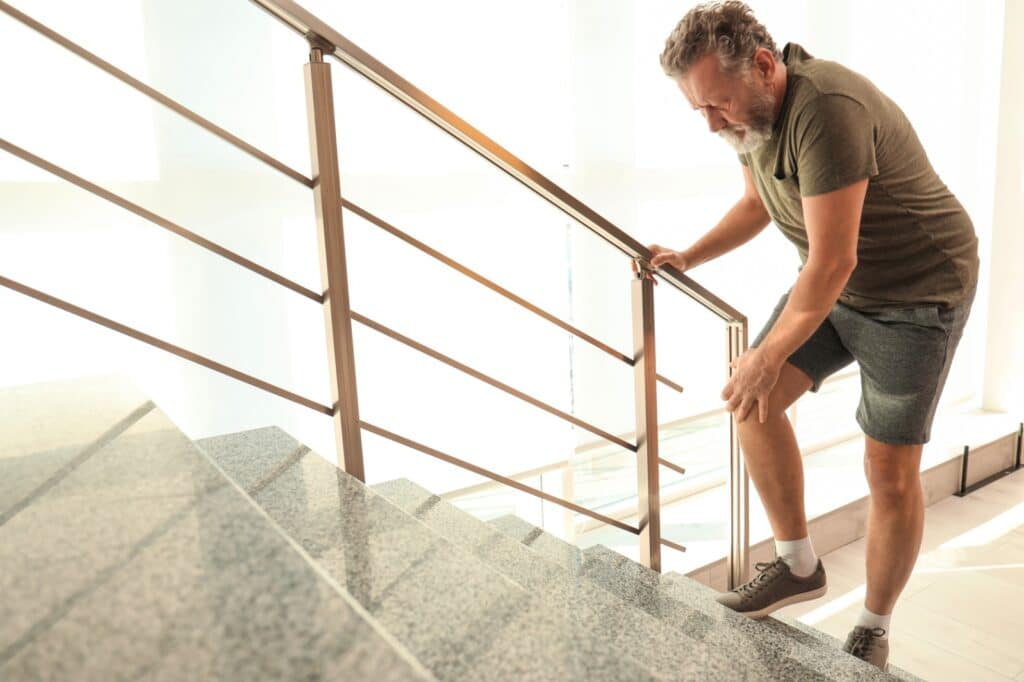
Can You Sue Someone if You Fall on Their Property?
 If a dangerous situation caused you to get hurt on someone else’s property, the short answer is yes, you can sue the property owner.
Of course, a range of details and circumstances will influence whether your specific slip and fall case may lead to a lawsuit. These situations are not always straightforward, and the guidance of an experienced personal injury attorney can make a huge difference.
Keep reading to learn about suing after a slip and fall accident, what the law says in Texas, and how a personal injury lawyer can help.
What Is a Slip and Fall Personal Injury?
 A slip and fall on someone else’s property involves premises liability law. Premises liability is the concept that a property owner is responsible for injuries and other damages that happen on their property, but only in certain circumstances. Slips and falls are one premises liability incident, but other types include poor security, elevator and escalator accidents, toxic fumes, and pool incidents. However, the phrase “slip and fall” is commonly used to describe all types of premises liability claims.
While filing a lawsuit against a property owner is possible after a slip and fall, not every personal injury claim goes that far. If you and your personal injury attorney reach an agreement with the property owner and their insurance company, you may settle the case with only mediation and negotiation. Still, if these conversations break down, you might have to file a personal injury lawsuit.
Let’s dig into how responsibility (liability) works in Texas.
Who Is Responsible for a Slip and Fall Accident on Someone Else’s Property, Me or the Property Owners?
 A property owner must keep their property safe for anyone who has the right to be there. This is called a “duty of care.” Local governments keep public spaces, like sidewalks or the post office, safe. Business owners maintain their shops and restaurants for customers. Homeowners repair dangerous conditions as needed to protect their loved ones and guests.
At the same time, most reasonable people can’t possibly be responsible for any mistake people might make, like tripping on a step while carrying a full basket of laundry. We’re expected to be mindful of our surroundings and make reasonable judgement calls. It’s common sense to watch where you’re walking, pay attention to signs warning of hazards, and move carefully through unfamiliar spaces.
These are reasonable expectations. The term “reasonability” comes up often in slip and fall cases; it refers to how property owners and visitors to the property are expected to behave.
No matter if you’re dining at a restaurant, getting groceries, or simply enjoying the apartment you live in, you deserve to feel safe, and to be aware of any potential hazards so you can avoid them. It’s when owners neglect these basic duties that they become responsible for your slip and fall.
Who Is Responsible for a Slip and Fall Accident on Someone Else’s Property in Texas?
In the state of Texas, the legal framework governing slip and fall accidents falls under a category of law known as premises liability.
This area of law dictates that property owners and occupants have a legal obligation to ensure their environment is safe for those who enter. However, determining who is “at fault” is rarely a black-and-white issue.
Texas law balances the responsibilities of the owner against the personal responsibility of the visitor. Whether you are a customer in a retail store, a guest at a private residence, or a pedestrian on a public walkway, understanding your rights requires a deep dive into Texas statutes, the classification of visitors, and the rigorous standards of “reasonableness” applied by Texas courts.
The Core Concept: Duty of Care in Texas
A property owner’s primary responsibility is to maintain their premises in a condition that does not pose an unreasonable risk of harm. This is legally defined as a “duty of care.” Under Texas common law and reinforced by various court precedents, the level of care an owner owes you depends entirely on your reason for being on the property. In Texas, visitors are generally divided into three categories: invitees, licensees, and trespassers.
An invitee is someone on the premises for the mutual benefit of both parties, such as a shopper in a grocery store. This group is owed the highest duty of care. A licensee is someone there for their own purposes with permission, like a social guest. A trespasser has no permission to be there and is generally owed the lowest duty of care—only that the owner does not willfully or wantonly injure them.
When Is the Property Owner Responsible?
The property owner is responsible for your slip and fall injury if they fail to meet the standard of care required for your visitor status. To hold an owner liable in Texas, a plaintiff must typically prove that the owner had “actual or constructive knowledge” of a dangerous condition. According to the Texas Supreme Court, negligence is established if the owner knew of the hazard or should have known about it through reasonable inspection.
Responsibility is usually triggered by one of the following scenarios:
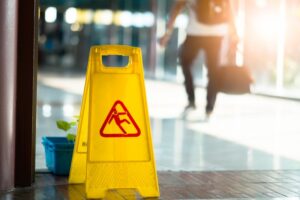
- Creation of the Hazard: An employee mops a floor but fails to put up a “Caution: Wet Floor” sign.
- Actual Knowledge: A customer informs a manager about a spilled drink, but the manager fails to clean it up or cordon off the area within a reasonable timeframe.
- Constructive Knowledge: A leak in a ceiling has been dripping for hours, creating a large puddle. Even if no one reported it, the owner “should have known” about it if they were performing reasonable inspections.
Factors Determining Owner Liability
Texas courts look at several variables to decide if an owner acted reasonably. One of the most significant factors is the “Time-Notice” rule. If a grape falls on a grocery store floor and you slip on it ten seconds later, the owner is likely not liable because they did not have a reasonable amount of time to discover and remove it. However, if that grape has been stepped on multiple times and looks “smeared,” it suggests it has been there a long time, increasing the owner’s liability.
Other factors include:
- Did the owner have a regular cleaning and inspection log?
- Was the lighting adequate for a person to see the floor clearly?
- Was the hazard “open and obvious”? In Texas, if a danger is so plain that any reasonable person would see and avoid it, the owner may not have a duty to warn you about it.
The Role of Texas Statutes: Chapter 75 and Beyond
While much of premises liability is based on case law (decisions made by judges), the Texas Civil Practice and Remedies Code provides specific statutes that can impact a case. For example, Chapter 75, also known as the “Recreational Use Statute,” limits the liability of landowners who open their property to the public for recreation (like hunting or hiking). In these cases, the owner is only liable if they are “grossly negligent.”
Furthermore, Chapter 95 of the same code provides special protections for property owners against claims made by independent contractors. If you are an electrician working on a building and slip, the owner might not be liable unless they exercised “control” over your work and had actual knowledge of the danger.
When Is the Injured Person Responsible?
While owners have duties, visitors also have a legal obligation to exercise “ordinary care” for their own safety. You cannot walk through a world with your eyes closed and expect to be compensated for every stumble. Texas law expects you to be mindful of your surroundings.
You might be held responsible, or partially responsible, if:
- You were distracted by your phone or another device.
- You entered an area marked with “Keep Out” or “Employees Only” signs.
- The hazard was so obvious that you should have seen it (the “Open and Obvious” doctrine).
- You were wearing inappropriate footwear for the conditions (e.g., high heels on a construction site).
Understanding Proportionate Responsibility in Texas
The most critical statute for an injured person to understand is Texas Civil Practice and Remedies Code § 33.001, which outlines the rule of Modified Comparative Negligence (often called the “51% Bar Rule”).
In Texas, a jury is asked to assign a percentage of fault to both the plaintiff and the defendant. Your total compensation is then reduced by your percentage of fault. However, if your fault is found to be 51% or greater, you are legally barred from recovering any money at all.
Example: If a court determines your total damages (medical bills, lost wages, pain) are $100,000, but they find you were 30% at fault because you were texting, you will only receive $70,000. If they find you were 51% at fault, you receive $0. This makes the presentation of evidence regarding your behavior during the incident incredibly important.
Proving Your Case: The Burden of Proof
In a Texas slip and fall case, the “burden of proof” lies entirely with the injured person (the plaintiff). You must prove by a “preponderance of the evidence” (meaning it is more likely than not) that the property owner’s negligence caused your injuries.
This requires evidence such as:
- Surveillance Footage: Showing how long a spill sat on the floor before you arrived.
- Witness Statements: People who saw the fall or noticed the hazard beforehand.
- Maintenance Records: Proving the owner skipped scheduled inspections or ignored recurring leaks.
- Photographs: Capturing the scene exactly as it looked at the time of the accident, including the lack of warning signs.
Public vs. Private Property: Special Rules
If you slip on a sidewalk or inside a government building, different rules apply. Claims against government entities in Texas are governed by the Texas Tort Claims Act (Chapter 101 of the Civil Practice and Remedies Code).
Filing a claim against a city or the state is significantly more difficult than suing a private business.
There are strict “notice” requirements—sometimes as short as 30 to 90 days—where you must formally notify the government of your intent to sue. Additionally, the amount of money you can recover is capped by state law. These protections exist to shield the public treasury, but they can be a major hurdle for injured citizens seeking justice.
Why “Reasonability” Matters
The term “reasonability” is the heartbeat of Texas personal injury law. Because every property is different, the law doesn’t have a rigid checklist for every floor. Instead, it asks: “What would a person of ordinary prudence do in this situation?”
A “reasonable” homeowner wouldn’t necessarily mop their porch during a rainstorm, but a “reasonable” grocery store owner would be expected to put out mats near the entrance when it starts raining.
This flexibility allows the law to adapt to different environments, but it also makes these cases highly complex and prone to intense debate in the courtroom regarding what “reasonable” maintenance looks like.
Protecting Your Rights After a Fall
No matter who is ultimately at fault, the steps you take immediately following a slip and fall in Texas are vital for your potential legal claim. First, report the accident to the property owner or manager and ensure an incident report is filed. Second, seek medical attention immediately; some injuries, like concussions or internal bruising, may not be apparent until days later.
Third, avoid making detailed statements to insurance adjusters or signing releases without professional guidance. The goal of an insurance company is often to maximize its percentage of fault to trigger the 51% bar rule. Early documentation of the scene and your injuries is the best defense against these tactics.
Balancing the Scales
Responsibility for a slip and fall in Texas is a shared spectrum. While property owners have a heavy burden to maintain safe premises under the duty of care, the state’s comparative negligence laws (Texas Civil Practice and Remedies Code § 33.001) ensure that visitors must also remain vigilant.
Because the difference between 49% fault (where you get paid) and 51% fault (where you get nothing) is so slim, these cases often turn on the smallest details. If you have been injured, it is in your best interest to work with an experienced personal injury lawyer who understands the nuances of the Texas Civil Practice and Remedies Code and can help present your case in the most favorable light.
Does it Matter if the Fall Happens on Private or Public Property?
 Whether you slip and fall on residential, commercial, or public property, you have the right to sue the property owner if their negligence contributed to your injuries. Further, you should always report the hazard to someone who can address it before someone else is hurt.
The differences begin when it comes to who is responsible and how they will compensate you. On private property, such as a home or store, it’s relatively easy to connect with the owner and negotiate the claim. On public property, like a city playground or government building, you’re fighting an entity with significant financial and legal resources to push back on your claim.
From the complications of a fall on public property to the social challenges of filing a claim against someone you know personally, an experienced personal injury attorney can guide you through the process of a slip and fall lawsuit. Not only will this simplify the process, it will increase your chance of getting the compensation you deserve.
Contact Will Adams Law Firm When It’s Time to File a Lawsuit
We hope you never get injured in a slip and fall or have to file a lawsuit. However, if it does happen, we’re ready to offer the help you need with dedication to the attorney client relationship. Because this is a complicated process that most people aren’t familiar with, working with a lawyer is the best way to ensure you build a good case while also focusing on your physical healing.
To schedule your free consultation with our law firm today, call (281) 371-6345 or complete the simple contact form on our website. We look forward to hearing from you!
The content provided here is for informational purposes only and should not be construed as legal advice on any subject.