
Pecan Grove, TX Personal Injury Lawyers
The moments following a severe collision blur together into a confusing mix of hospital lights, police reports, and mounting financial stress. Families in Pecan Grove face immense physical and emotional burdens when a commercial driver’s recklessness or another motorist’s negligence causes sudden, unexpected harm. The daily mix of heavy freight trucks and passenger vehicles creates a highly dangerous environment on major local thoroughfares like the Grand Parkway and FM 1093. Dealing with corporate insurance claims and medical bills while trying to recover is a daunting task no one should have to face alone.
What Types Of Personal Injury Cases Do You Handle In Pecan Grove?
Victims in Pecan Grove can pursue financial recovery for collisions involving commercial 18-wheelers, standard passenger vehicles, motorcycles, and pedestrians. Common civil claims also include dangerous premises liability incidents and catastrophic workplace injuries. Securing proper legal representation ensures your rights remain protected against aggressive corporate defense tactics.
Fort Bend County has experienced explosive residential and commercial growth, bringing thousands of daily commuters and heavy commercial vehicles to the local infrastructure. This high volume of traffic naturally increases the risk of severe collisions. Intersections along FM 1093 and the feeder roads for the Westpark Tollway see a high volume of complex collisions that leave residents facing months of medical treatments and physical rehabilitation.
Our legal team frequently encounters commercial accidents caused by specific negligent actions. Common claims we handle include:
- Commercial 18-wheeler collisions caused by driver fatigue, improper maintenance, or unsecured heavy cargo.
- Auto accidents resulting from distracted driving, speeding, or aggressive lane changes on local highways.
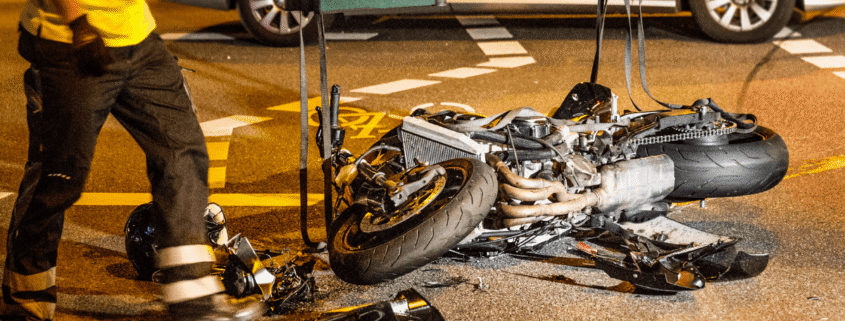
- Motorcycle crashes where drivers fail to check their massive blind spots before merging into passenger lanes.
- Pedestrian accidents in high-traffic commercial zones and rapidly expanding residential neighborhoods.
- Premises liability cases involving dangerous conditions, uneven flooring, or inadequate security on commercial properties.
- Catastrophic workplace injuries resulting from severe occupational hazards and heavy machinery malfunctions.
When a passenger vehicle traveling at highway speeds suddenly impacts another object, the transfer of kinetic energy to the unprotected human body is devastating. A fully loaded semi-truck can weigh up to 80,000 pounds, making it exponentially more dangerous than a standard commuter car. The sheer mass of an 18-wheeler means that even low-speed collisions can result in permanent, life-altering injuries for the occupants of smaller vehicles. We understand the complex physics and severe mechanical forces involved in these collisions, allowing us to build robust legal strategies for our clients.
How Does Texas Law Determine Fault In An Injury Claim?
Establishing fault in a Texas personal injury claim requires proving that the defending party owed a legal duty of care, breached that duty through reckless or negligent actions, and directly caused your physical injuries. Objective evidence from the crash scene is necessary to demonstrate this legal liability.
Proving that another driver or corporate entity is legally responsible for your harm is rarely a straightforward process. Establishing negligence requires building a clear timeline of events and demonstrating exactly how the at-fault parties violated standard safety regulations. The four elements of negligence are duty, breach, causation, and damages. Drivers owe a duty of care to everyone else on the road to operate their vehicles safely, remain attentive, and follow all traffic laws. A breach occurs when a driver texts behind the wheel, runs a red light, or operates a vehicle while intoxicated.
They must then prove that this specific breach was the proximate cause of your injuries, rather than an unrelated medical event. Finally, you must have suffered legally recognized damages, such as emergency medical bills or lost earning capacity. Successfully establishing these legal elements of negligence requires gathering official police reports, witness statements, and accident reconstruction data. This legal burden falls entirely on the injured plaintiff, which makes securing objective evidence immediately following an incident a vital step in the civil litigation process.
Commercial carriers can also be held vicariously liable for the negligent actions of their employees under the legal doctrine of respondeat superior. If a driver causes a wreck while actively operating within the scope of their employment, the company is ultimately responsible for the resulting damages. Additionally, trucking companies can be held directly liable for negligent hiring and retention if they knowingly hire a driver with a history of severe safety violations. We meticulously investigate corporate employment files to identify these systemic safety failures.
How Does Proportionate Responsibility Affect My Settlement?
Texas utilizes a modified comparative negligence standard for civil claims. Injured victims can recover financial compensation as long as they are not more than fifty percent responsible for the accident. If you carry partial fault, your final financial award is reduced by your specific percentage of responsibility.
Insurance adjusters frequently use this legal standard as a weapon against unrepresented victims. They will heavily review the police report and your initial statements, looking for any excuse to shift the blame onto your shoulders. For example, if a speeding commercial driver hits you while you are changing lanes, their corporate defense team might argue that you lingered in their blind spot or failed to use your turn signal properly. They train their representatives to find even the smallest discrepancy in your story to weaponize against your claim.
Under the strict rules established in the Texas Civil Practice and Remedies Code Section 33.001, if a jury assigns you 51 percent or more of the fault, you are completely barred from recovering any financial damages whatsoever. If a jury determines you are 20 percent at fault for an accident and awards $100,000 in damages, you will only receive $80,000. We anticipate these blame-shifting tactics and use objective evidence from the crash site to protect your right to full compensation. By clearly establishing the defendant’s overwhelming negligence, we prevent insurance carriers from successfully utilizing the comparative fault defense to avoid paying what they rightfully owe.
What Compensation Is Available for Injured Victims in Fort Bend County?
Injured individuals in Texas can recover comprehensive economic damages for quantifiable financial losses, including emergency medical bills, projected future healthcare costs, and lost wages. Victims may also pursue non-economic damages to compensate for daily physical pain, permanent disfigurement, mental anguish, and loss of physical mobility.
The primary objective of a personal injury claim is to make you financially whole again after a devastating event. Calculating the true cost of your injuries requires looking far beyond the initial emergency room invoice. We work closely with medical professionals, vocational rehabilitation counselors, and forensic economists to project the lifetime cost of your care. This detailed financial modeling ensures that you do not face out-of-pocket expenses for future surgeries, specialized rehabilitation, or necessary home modifications decades after the original accident.
It is absolutely vital to reach maximum medical improvement (MMI) before considering any settlement offers. Resolving your case too early will leave you financially responsible for hidden medical complications that emerge months or years later. A comprehensive settlement demand against a commercial carrier or negligent driver typically includes the following forms of financial recovery:
- Complete coverage for all ambulance transports, surgical procedures, diagnostic imaging, and extended hospital stays.
- Financial reimbursement for lost wages during your initial physical recovery period away from work.
- Compensation for diminished future earning capacity if you cannot return to your previous demanding career.
- Recovery for ongoing physical therapy, pain management treatments, and necessary adaptive medical equipment.
- Damages for the daily physical pain and emotional distress caused by the severe physical trauma.
- Reparations for permanent scarring, severe disfigurement, or partial loss of physical mobility.
How Long Do I Have to File A Personal Injury Lawsuit in Texas?
Under Texas state law, injured victims generally have exactly two years from the date of the accident to file a formal personal injury lawsuit. Failing to file a civil claim within this strict statute of limitations permanently eliminates your legal right to seek financial compensation.
While two years might seem like a substantial amount of time, building a compelling civil case against a major trucking corporation or stubborn insurance provider requires months of intensive preparation. Evidence must be preserved, complex liability factors must be unraveled, and medical professionals must evaluate your long-term prognosis. The two-year deadline established in Texas Civil Practice and Remedies Code Section 16.003 is strictly enforced by the courts. Missing this deadline by even a single day will result in your case being permanently dismissed, leaving you entirely responsible for your own medical debt.
Catastrophic personal injury lawsuits with significant financial damages are typically filed in the Fort Bend County District Courts. These specific courts, located at the Fort Bend County Justice Center in Richmond, hold the jurisdiction necessary to preside over complex civil litigation and high-dollar injury claims. Delays in seeking legal counsel only benefit the negligent party and their corporate insurance provider.
Physical evidence at the crash scene is quickly washed away by rain, cleaned up by road crews, or paved over by local construction. Eyewitnesses relocate, change phone numbers, or forget the specific details of the collision entirely. Contacting knowledgeable legal representation early ensures that vital documentation is secured before it is lost or intentionally destroyed.
What Should I Do Immediately After an Accident in Pecan Grove?
Securing your physical safety and obtaining an immediate medical evaluation are the absolute priorities following a severe accident. Promptly contacting local law enforcement to generate an official crash report and preserving physical evidence from the scene establishes the foundational framework for a future personal injury claim.
The actions you take in the immediate aftermath of a collision significantly impact your ability to recover financial damages later. The shock and adrenaline of a severe impact often mask the immediate symptoms of deep physical trauma, making emergency medical evaluations necessary.
Delaying a visit to a local emergency room gives opposing insurance companies an opportunity to argue that your injuries were caused by an unrelated event after the crash. Seeking immediate medical attention at a trauma center or a local facility like Memorial Hermann Katy Hospital or OakBend Medical Center ensures your injuries are properly documented and treated.
If you are involved in a collision, take the following steps to protect your health and your legal right to financial recovery:
- Move to a safe location if possible and immediately call 911 to request police and emergency medical responders.
- Request an official crash report from the responding law enforcement agency, as this document contains vital road condition data and initial liability assessments.
- Take extensive photographs and videos of the crash scene, including all vehicle damage, physical injuries, skid marks, and active traffic signals.
- Collect contact information and insurance details from all involved drivers, as well as names and phone numbers from any eyewitnesses who stopped to help.
- Seek a comprehensive medical evaluation on the exact same day as the accident, even if you believe your physical injuries are minor or temporary.
- Contact an experienced personal injury attorney before speaking with any opposing insurance adjusters or signing any premature settlement documents.
What Evidence Is Needed to Prove Negligence in a Civil Court?
Successfully proving a civil injury claim requires preserving perishable physical evidence before it disappears. Critical documentation includes official police reports, commercial dashcam footage, electronic control module data, corporate maintenance records, witness testimony, and comprehensive medical charts detailing the full extent of your physical trauma.
Modern commercial trucks are equipped with an electronic control module (ECM), often referred to as a black box. This device records vital telematics data in the exact moments leading up to an impact, including the truck’s speed, hard braking events, steering inputs, and whether the driver was using cruise control. Unrepresented victims rarely have the resources to force a major trucking company to hand over this data. Without aggressive legal intervention, this data is routinely overwritten or intentionally erased as the truck returns to active service.
The firm immediately drafts and sends formal spoliation letters to the commercial carrier and its insurance provider following a severe wreck. This strict legal demand requires the company to preserve the vehicle in its post-crash state and forbids it from deleting logbooks, telematics data, or internal dispatch communications. To build a preponderance of the evidence, we meticulously gather and analyze:
- Dashcam footage and exterior surveillance video from nearby Pecan Grove commercial businesses.
- Mobile phone records to determine if the at-fault driver was distracted or texting during the collision.
- Post-accident toxicology reports if drunk driving or illegal substance abuse is suspected by law enforcement.
- Corporate employment records, safety training logs, and background checks for commercial fleet drivers.
- Detailed medical records, diagnostic imaging, and surgical reports from your treating physicians.
Contact Will Adams Law Firm PLLC For A Free Consultation
If you or a family member suffered injuries due to a commercial driver’s reckless behavior or another motorist’s negligence, we are ready to listen. Will Adams Law Firm PLLC proudly represents injured victims throughout Pecan Grove and the surrounding communities of Fort Bend County.
Contact us today to schedule a complimentary, confidential consultation regarding your case.
Frequently Asked Questions
What if the negligent driver who hit me fled the scene?
If you are the victim of a hit-and-run collision, you may still pursue financial recovery through your own Uninsured/Underinsured Motorist (UM/UIM) coverage. This specific policy provision steps in to cover your hospital bills, rehabilitation costs, and lost wages up to the limits you selected on your personal auto policy. Our attorneys can help you navigate this first-party claim process effectively.
Who pays my medical bills while my lawsuit is pending?
Initially, your own health insurance, personal injury protection (PIP), or medical payments coverage will process your immediate medical bills. Once your legal case is successfully resolved, the at-fault party’s liability insurance will compensate you for those medical expenses. Our team also works closely with medical providers who may treat you on a letter of protection, allowing you to defer payment entirely until your case settles.
Should I give a recorded statement to the at-fault driver’s insurance?
No, you are under no legal obligation to provide a recorded statement to the opposing insurance company. Adjusters are trained to use leading questions to minimize their financial liability and twist your words. It is highly advisable to let your legal counsel handle all communications on your behalf to protect the absolute integrity of your claim.
Can I still recover damages if a pre-existing condition was made worse?
Yes, Texas law allows you to recover damages for the aggravation or exacerbation of a pre-existing medical condition. The negligent party is responsible for the exact degree to which their reckless actions worsened your specific physical health. Comprehensive medical documentation is required to clearly distinguish between your prior condition and your new injuries.
How long does a personal injury settlement take in Texas?
The timeline for a personal injury settlement varies widely depending on the complexity of the accident, the severity of your injuries, and the willingness of the insurance company to negotiate fairly. Simple cases may resolve in a few months, while complex commercial trucking collisions involving multiple liable parties can take a year or longer. Reaching maximum medical improvement is the most vital factor before finalizing any timeline.